Immersive Learning for CX Training and Coaching 

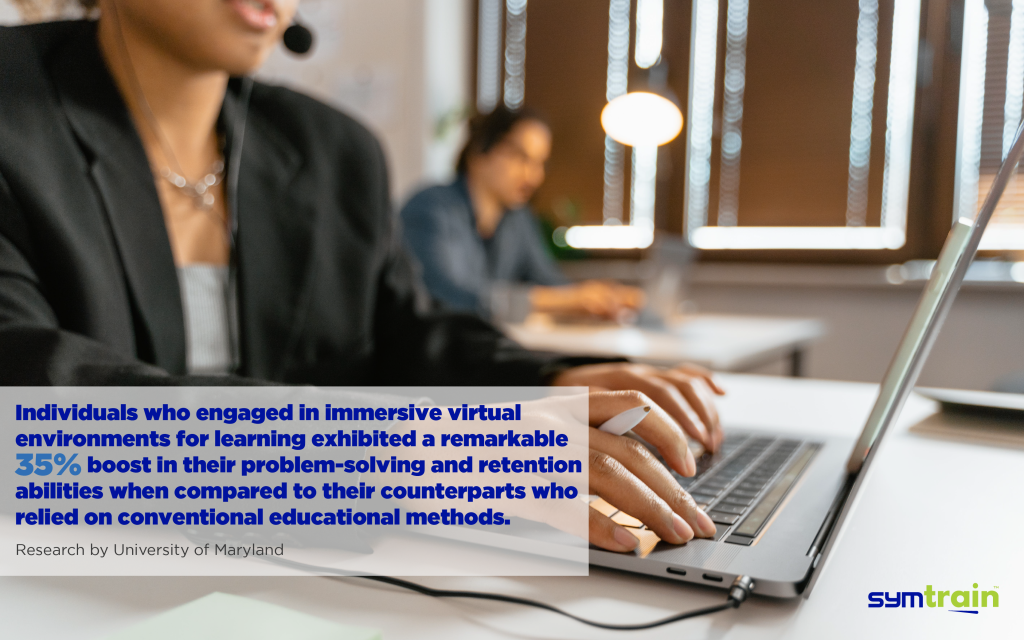
Immersive learning is a time-tested technique that educators have employed for years to enhance students’ understanding of subject matter and improve knowledge retention. According to research conducted at the University of Maryland, individuals who engaged in immersive virtual environments for learning exhibited a remarkable 35% boost in their problem-solving and retention abilities when compared to their counterparts who relied on conventional educational methods. 

When adapted to the professional sphere, immersive customer experience (CX) training and coaching equips new and existing employees with the skills needed to navigate real-world scenarios within a simulated environment. One such platform, SymTrain, offers immersive, experiential learning opportunities through hands-on practice, enabling individuals to tackle various scenarios repeatedly through a coaching simulation space.  

This iterative approach has been proven to significantly enhance content comprehension. However, SymTrain takes it a step further by integrating guided practice and AI coaching into the learning process, facilitating skill mastery. 
The Advantage of Immersive Learning 

Immersive learning capitalizes on the principle of learning by doing. Research indicates that it not only enhances cognitive skills and comprehension but also bolsters memory and problem-solving abilities. As per research conducted by Accenture, the process of learning through experiential immersive means has the potential to enhance knowledge retention by an impressive 75%. 

Consequently, SymTrain has crafted a training platform that allows individuals to apply their knowledge and skills in lifelike workplace situations. Moreover, it affords learners the time and space necessary to build confidence and competence, expediting their journey toward proficiency. Step by step, SymTrain’s platform augments existing knowledge and skills. Once individuals assemble their Sym library, they gain ample opportunities for self-paced practice through these immersive learning simulations. 
In that way, SymTrain starts impacting companies as early as the typically time-consuming onboarding process, reducing it by an impressive 50 to 70%. This means that new agents can reach their peak productivity levels in half the time, not only accelerating their performance but also instilling a remarkable boost in their confidence. Such efficiency in onboarding has the potential to revolutionize the way organizations bring their team members up to speed, ensuring a faster and more confident start for new hires. 

SymTrain’s Approach to Immersive CX Training 

SymTrain’s platform meticulously recreates real-world scenarios that customer service agents are likely to encounter during their interactions with live customers. Rather than subjecting them to on-the-job learning, carefully crafted Syms offer a secure environment for practice, allowing individuals to make mistakes and self-correct with the assistance of an intuitive AI Coach, a powerful coaching simulator. Through AI training and coaching, agents receive immediate, targeted feedback, recognizing their strengths and pinpointing areas that require improvement.  
Additionally, they can repeat each lesson as many times as necessary until they feel confident with the content, ready to progress to the next skill. The level of guidance can be adjusted, empowering agents to become more self-sufficient until they can successfully navigate each scenario independently. By incorporating automated role-plays into your training curriculum, you can transform your training process and expedite agents’ skill mastery, creating an immersive CX training experience. 

Immersive learning, coupled with AI training and coaching, redefines the way to approach education and professional development. It not only enhances learning efficiency but also builds confidence and competence, enabling individuals to excel in their roles, particularly in the dynamic field of customer experience.  

Embracing immersive CX training is a strategic step towards fostering a skilled and confident workforce! 

Continue Learning:

AI Coaching Your Agents with SymTrain 

Running a contact center today means living in a constant balancing act. You are asked to hit aggressive KPIs, keep costs in check, and deliver outstanding customer experiences, all while managing teams who face increasingly complex interactions. Traditional coaching methods simply can’t keep up. They are slow, generic, and hard to scale. Addressing this challenge head-on not only ensures that contact centers stay at the forefront of the industry standards but also positions them to thrive in a very competitive landscape where service excellence is the top goal. What you need is a way to coach agents with precision, speed, and impact. That is exactly what AI Coaching with SymTrain delivers.

The Main Business Challenges for Coaching Today 

  • No individualized coaching plans: One-size-fits-all training does not address the real skill gaps of your team. An agent who struggles with empathy needs something very different from one who struggles with compliance.
  • Constant performance pressure: Supervisors are being asked to drive AHT, FCR, and CSAT up while balancing agent morale and retention.
  • Stagnant KPIs: You’ve invested in training, but AHT, FCR, and even QA scores have plateaued. Breaking through requires a new approach.

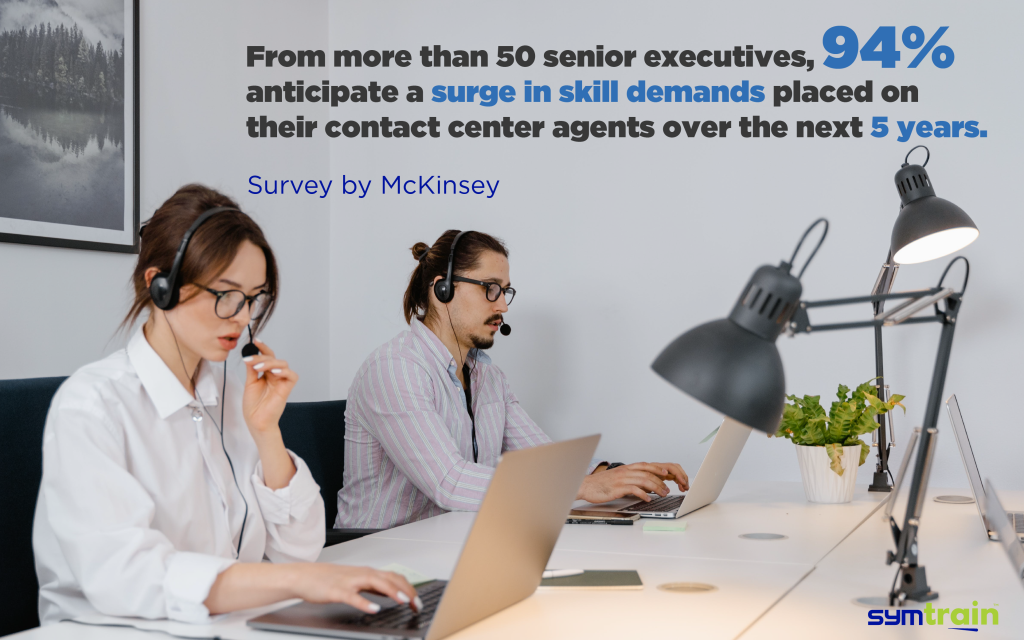
Addressing these challenges is crucial for organizations looking to thrive and adapt in a rapidly evolving landscape. According to a McKinsey survey involving more than 50 senior executives, an overwhelming 94% anticipate a surge in skill demands placed on their contact center agents over the next five years.  

This remarkable statistic sheds light on the escalating challenges facing the industry. It harmoniously aligns with the issues outlined, emphasizing the pressing need for individualized coaching plans and heightened agent performance levels 

Maximize Performance with AI-Driven Coaching Approaches 

Instead of relying on random call reviews and delayed feedback, AI Coaching gives you:

  • Immediate feedback: Coaching modules can be generated directly from a customer interaction.
  • Relevant training: Lessons are tied to actual QA findings and performance gaps.
  • Scalability: Whether you’re managing 50 or 5,000 agents, the approach stays consistent.

Practical use cases:

  • A new hire fumbles call openings. SymTrain builds a simulation where they practice until it becomes second nature.
  • A seasoned rep misses compliance steps. A targeted module is delivered the same day, linked to QA notes.
  • A team’s AHT spikes. SymTrain provides practice sessions on call flow efficiency, and leaders see measurable improvement within weeks.

AI Coaching initiatives can be fine-tuned to address the specific needs and challenges identified in agent performance, ensuring a highly relevant and effective training regimen for agents. By leveraging AI-driven simulations, contact centers can adapt swiftly to changing demands and industry trends, ultimately leading to an agile, responsive, and empowered workforce. 

Innovative companies have quickly recognized the potential of AI-powered simulations to transform their training and coaching methodologies, and the results are nothing short of remarkable. By embracing this cutting-edge technology, they’ve shattered the traditional time constraints associated with skill development. AI Coaching boosts agent performance and also enhances overall operational efficiency and customer satisfaction.

coaching

SymTrain’s Tailored Coaching Solution 

SymTrain stands at the forefront of tailored coaching solutions. It’s designed to make coaching precise, efficient, and data-driven. Here’s how:

  • Automated simulations built from your actual calls in minutes.
  • Create or update simulations in minutes with Sym Gen AI.
  • Coaching exercises tied directly to QA data.
  • Performance dashboards tracking both sentiment and KPIs.
ResultImpact
$600 monthly savings per agentLess time and resources spent on coaching
27% lower AHTFaster, more efficient customer interactions
Higher CSAT and FCRTargeted skill-building that sticks
Up to 0% AttritionAgents feel supported, valued, and confident

Why Leaders Choose SymTrain

With SymTrain, coaching becomes less about catching mistakes after the fact and more about proactively building the skills that move your KPIs. Supervisors spend less time buried in call recordings and more time driving strategy and team culture.

The outcome is clear: stronger agents, higher-performing teams, and customers who feel the difference.

When your agents feel confident, supported, and equipped to succeed, every customer interaction improves, and so do your KPIs. SymTrain makes this possible by turning coaching into a fast, data-driven process that directly drives results. Leaders who embrace AI coaching now will not only reduce costs and improve performance but also build teams that stay engaged and loyal in the long run. That is how you move from firefighting to leading with confidence. Want to know more about SymTrain Solutions? Book a demo!
Agent Performance Improvement Through Automated Training  

Do you struggle with agent performance without new processes and AI? Consider Automated Role-Playing for agents. Here’s why: 

Coaching is skill that is hard to transfer to agents who become supervisors. A new paradigm has emerged that leading brands are using to great succes.  

Agent performance is an unrelenting specter, an inescapable cornerstone that determines the very fate of success of most contact centers. The ability to dissect and understand the intricacies of how agents operate within the contact center environment is nothing short of crucial.  

This analysis not only holds the potential to enhance customer experience, but also plays an important role in mitigating compliance risk and driving revenue while bolstering customer retention rates. Contact centers employ a diverse array of key performance indicators (KPIs) to meticulously improve agent performance, aiming for a comprehensive and all-encompassing evaluation.  

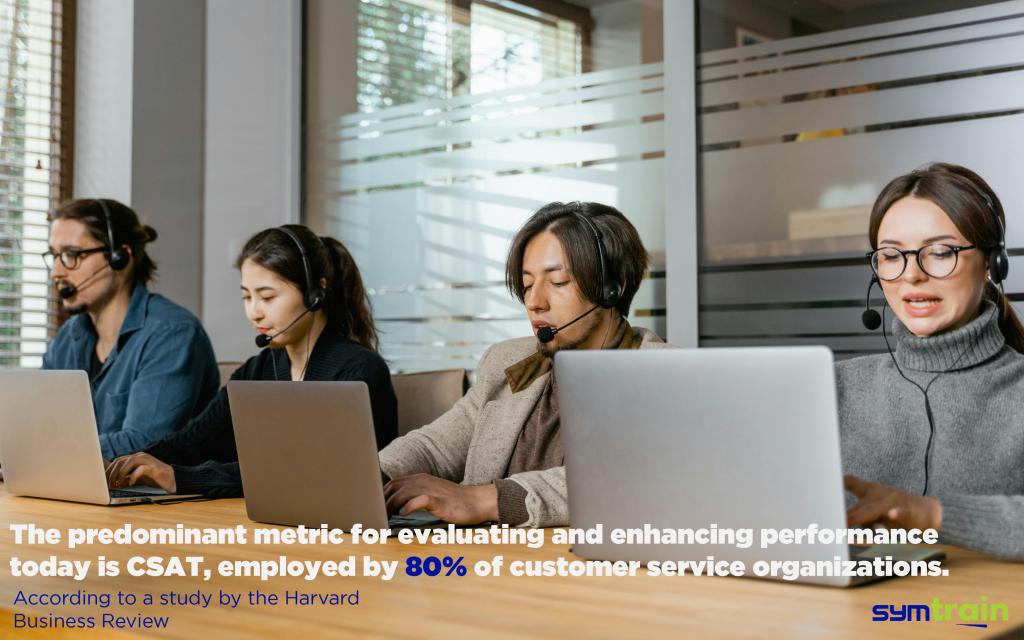
According to a study by the Harvard Business Review, the predominant metric for evaluating and enhancing performance today is CSAT, employed by 80% of customer service organizations. However, contact centers employ a spectrum of complementary metrics to determine how well their agents are doing. 

These traditional KPIs mainly encompass: 

Time to Proficiency: This metric scrutinizes the duration it takes for a new agent to attain customer-ready status. 

Average Handling Time (AHT): A crucial measure that calculates the average duration required to service a customer. 

First Call Resolution (FCR): This KPI assesses the percentage of calls that are successfully resolved during the initial interaction. 

Service Level: Service level represents the proportion of calls answered within a designated time window. It establishes caller expectations and mirrors the call center’s responsiveness.  

Business outcomes such as Sales per Hour, Collections per Day are key baseline requirements for some customer journeys. 

These meticulously chosen KPIs construct a granular and precise assessment of agent performance within the contact center environment. 

How to leverage performance metrics to improve operations? 

For harnessing the full potential of these performance metrics and propelling true enhancements to the operation, it’s advisable to adhere to a systematic approach: 

  • Use them to uncover performance gaps: Begin by dissecting the agent’s scores to unearth performance gaps. These may manifest as soaring call abandonment rates, protracted average handle times, or a dwindling first-call resolution rate. Iy is key to direct the efforts towards rectifying these discrepancies, thereby augmenting operational efficiency and elevating customer contentment. 
  • Use them to tailor agent training: Leverage the insights to pinpoint precise training requisites for agents. This will allow leadership to craft specialized training modules designed to amplify proficiencies in realms like active listening, adept conflict resolution, and comprehensive product knowledge. By doing so, agents are empowered to deliver superlative customer encounters. 
  • Adopt technological solutions: By adopting new approaches such as AI-powered automated training, companies can provide scalable and consistent training experiences. This technology facilitates continuous learning, allowing for real-time updates and adaptations to training content. Additionally, AI ensures the delivery of personalized and efficient training programs, ultimately enhancing employee skills and performance across the board. 

Achieve Top Performance Through Automated Training 

When it comes to equipping contact center agents for enhanced performance, forward-thinking leaders rely not only on the traditional monitoring of metrics, but also prioritize the adoption of cutting-edge training methodologies and solutions.  

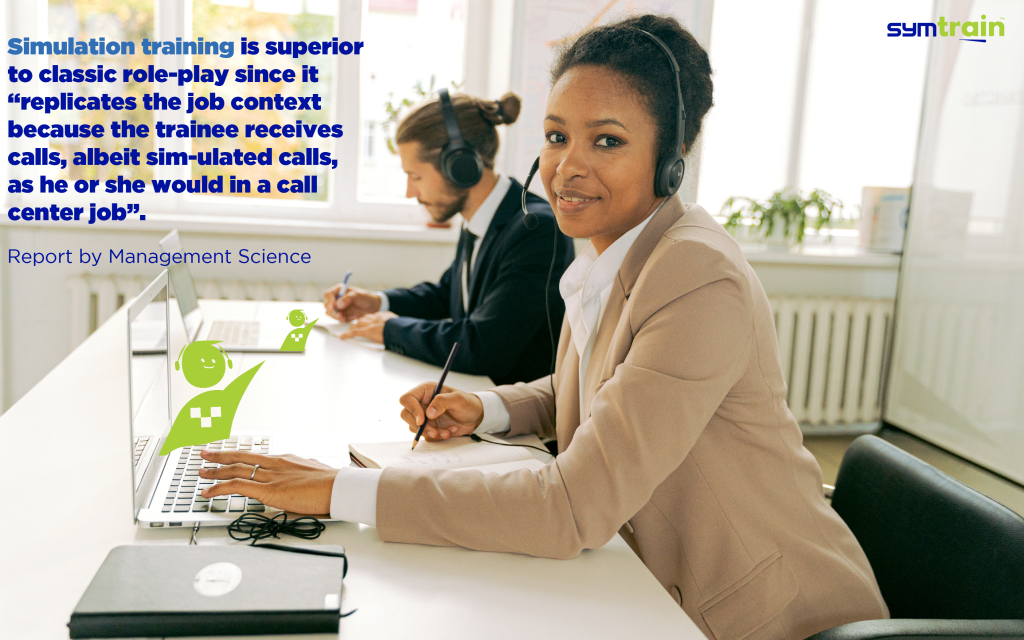
Among these methods comes simulated training. According to a study published in Management Science, and focused on the impact of simulation in call center performance, simulation training is superior to classic role-play since it “replicates the jobcontext because the trainee receives calls, albeit simulated calls, as he or she would in a call center job”. 

With automated training contact centers can enhance simulated training even further. Leaders and trainers can now harness the power of AI to craft specific simulations that have the power to refine the agent’s abilities in conversing with customers and prospects, fostering key attributes such as level of care, empathy, and active listening, all while minimizing the risk of customer dissatisfaction. 

With automated training, contact center leaders can prepare new recruits extensively before they engage with their first live customer or prospect. Tenured agents can continually hone their skills and address any proficiency gaps. This approach proves particularly effective when companies introduce new products, services, or operational methodologies, surpassing outdated practices like team huddles or sole reliance on knowledge articles.  

By leveraging AI-powered solutions, agents adopt a contemporary approach to practicing high-impact call scenarios in a free-form manner, without adhering to scripted interactions. Moreover, automated training aids in refining agent tone, soft skills, and offers invaluable feedback on best practices and requirements, boosting overall performance. 

Agents gain two times the initial confidence as they practice, navigate new challenges, and learn from simulated, real-life scenarios. 

Ready for more? 

Keep Exploring:

The Proper Feedback: Coach Agents to Be Their Best  

Many trainers, team leads, and operations managers often struggle to provide the right feedback to agents. Feedback leads directly to coaching. Coaching is an art and while Quality Assessment solutions show what needs addressing there is no answer as the how to fix things, until now. But let’s step back. In the capacity of managing a contact center, providing feedback during training emerges as a crucial aspect of these roles. The consistent provision of quality feedback since their onboarding aids agents in enhancing their performance, staying aligned with their objectives, and ensuring the accomplishment of business goals on the floor. 

In fact, in a McKinsey Global Survey, 68% of respondents indicated that continuous coaching and developmental feedback can have a positive impact on an individual’s performance. For an individual striving to excel as a contact center manager, possessing the skill to provide impactful feedback within the contact center becomes imperative. This skill not only bolsters the team but also reinforces desirable workplace behaviors. 

In the context of training, the importance of constructive feedback cannot be overstated within a call center setting; it stands as a cornerstone for achieving success. By maintaining a steady stream of genuine communication centered around agent performance, feedback can play a pivotal role in facilitating skill enhancement. 

What to Do When Providing Feedback is A Challenge 

In a bustling contact center environment with numerous seats, providing personalized feedback to each individual agent can prove to be a challenging endeavor. The sheer scale of operations, coupled with the unique learning needs of each agent, makes the task of tailored feedback delivery a complex one.  

As supervisors strive to offer meaningful insights and guidance to agents, the limitations of time and resources become evident. However, navigating this predicament presents an opportunity to leverage advanced solutions. Exploring alternatives like technology or AI-powered training and coaching can alleviate the challenge of delivering personalized feedback.  

These cutting-edge approaches have the capacity to analyze performance data at scale, identify individual training gaps, and offer tailored suggestions for improvement. By embracing technology-driven solutions, contact centers can transcend the constraints of manual feedback delivery and embark on a path to more effective, efficient, and targeted agent development. 

Moreover, embracing technology can usher in a transformative shift, allowing you to revolutionize and elevate your training feedback process in multifaceted ways. By integrating modern tools and platforms into the training regimen, companies can unlock many advantages that can significantly impact the effectiveness and efficiency of feedback mechanisms. 

Automated Role-Play Equals Personalized Feedback 

AI-powered training and coaching represent a transformative advancement in the realm of agent development. At the forefront of this innovation is SymTrain’s automated role-play, an intelligent solution that ushers in a new era of personalized guidance.  

By seamlessly integrating automated role-play into the training or coaching process, SymTrain bridges the gap between performance assessment and skill enhancement. Its real-time capabilities allow for immediate identification of skill gaps as they arise, empowering supervisors to provide timely and relevant feedback that is precisely tailored to each agent’s needs. This level of specificity ensures that agents receive guidance that directly addresses their areas of improvement, fostering a more efficient and effective learning journey. 

One of the standout advantages of AI-powered coaching is its ability to enhance First Call Resolution (FCR) performance. With Coach Sym, the feedback loop becomes a dynamic mechanism for boosting FCR rates. By identifying recurring challenges in customer interactions, the AI-driven system facilitates the development of targeted training modules that address these pain points.  

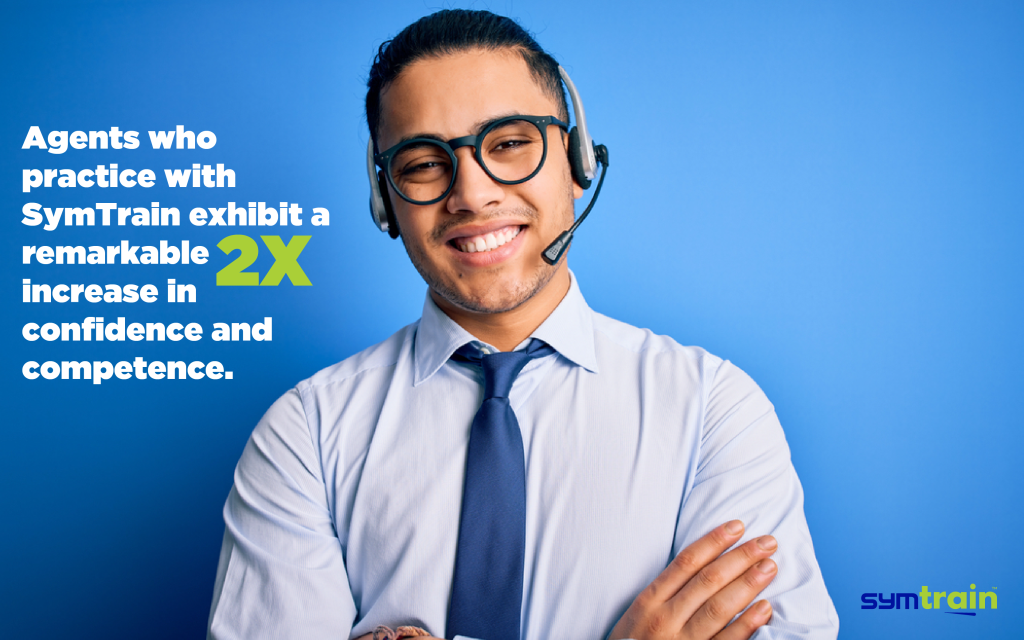
Agents Report 2X the Confidence 

The ability to quantitatively assess the competence and confidence levels of the workforce is possible with the integration of SymTrain. By analyzing the agent’s performance as many times as needed, managers will gain a holistic understanding of agent performance. This newfound insight enables them to provide targeted and data-backed feedback, addressing specific areas for improvement and acknowledging achievements in real-time. 

As this data-driven feedback loop tightens, a notable synergy emerges between enhanced competence and bolstered confidence and engagement among agents. A Gartner report shows that disengaged reps are 84% more likely to look for a new job. For that reason, it is important that the synergy is further amplified by the implementation of personalized coaching and training modules, which focus on bridging identified skill gaps and creating employee engagement.  

This comprehensive approach to development instills a sense of accomplishment and proficiency within agents, effectively doubling their confidence levels when they transition to live operations. The measurable impact is undeniable: agents who undergo this empowered development journey exhibit a remarkable 2X increase in confidence as they embark on their roles on the contact center floor.  

Ultimately, this transformative feedback mechanism not only shapes agents into more adept professionals but also cultivates a culture of continuous improvement and confidence that resonates throughout the entire contact center ecosystem. 

3 Training Techniques for Exemplary Customer Service 

Why is it that a surprising number of contact centers persist in relegating customer service excellence to an afterthought?

Is it the expense of improving training delivers little in return? Or perhaps expertise to deliver amazing training? Or is it that; well, what do you think? Frequently, many of these operations lean on minimal call center availability or a rudimentary survey, channeling their primary focus towards customer acquisition. 

Yet, the repercussions of this approach are profound, revealing a disinterest in the very individuals who underpin these enterprises. When customers encounter hurdles or frustrations in their attempts to engage with a brand, or when support teams lack the tools to effectively address their inquiries, they are more likely to explore alternative options. 

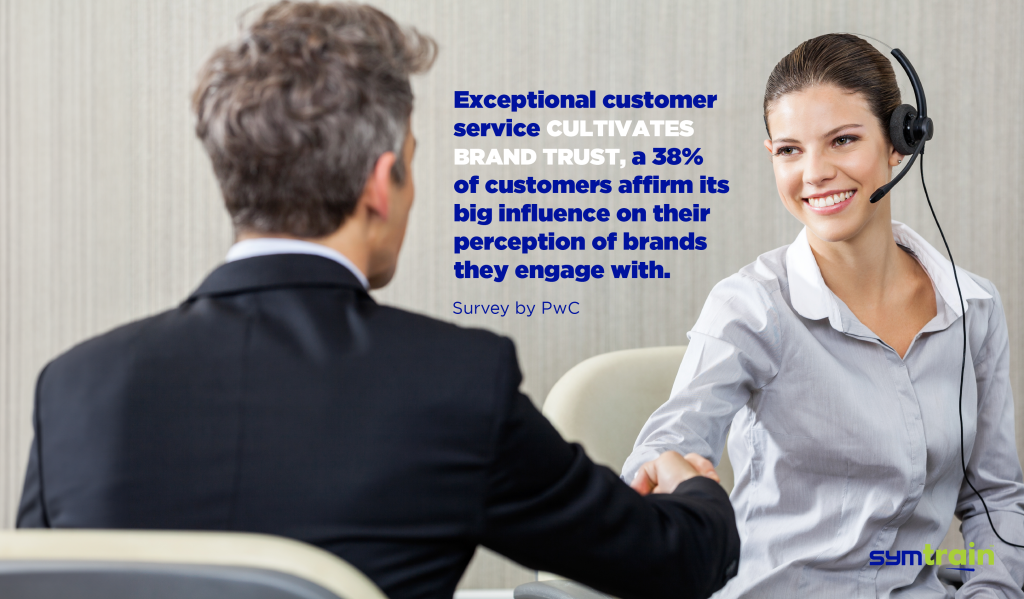
In the contact center industry, customer service surpasses mere issue resolution; it now stands as a pivotal factor in both attracting and retaining customers. Exceptional customer service cultivates brand trust, with a substantial 38% of customers affirming its substantial influence on their perception of brands they engage with regularly, according to a survey by PwC. 

To usher in a new standard of customer service, companies must prioritize the preparedness of their support teams to navigate a wide array of queries and challenges. This imperative commences with a robust customer service training program, one that equips team members with the essential skills and knowledge to excel. 

3 Training Techniques for Great Customer Service 

According to SHRM, approximately 20% of turnover occurs within the initial 45 days. That number alone proves that an efficient onboarding with a lot of practice is more than crucial to retain talent. If talent doesn’t feel knowledgeable and supported from day one, they will leave. If they go, how can you provide top of the line customer service?  

For that reason, here are some ways to deliver great training and at the same time build confidence in the workforce.  

Engage in Dynamic Role-Playing Scenarios for Skill Enhancement and Practice 

Regular role-playing has long been a staple of customer service training, providing a hands-on approach to honing communication and problem-solving skills. In these scenarios, support team members assume different roles to simulate real-world interactions, allowing them to practice effective responses and strategies. 

Furthermore, when embracing the evolution of customer service, the adoption of automated role-play solutions such as SymTrain, emerged as groundbreaking and exceptionally efficient options. This innovative approach transcends the limitations of traditional role-playing scenarios by leveraging technology to simulate real-life interactions.  

Automated role-play offers a dynamic platform where support team members can practice and refine their skills in a controlled yet lifelike environment. This not only enhances their problem-solving abilities and adaptability but also ensures consistent and standardized training across the board.  

Moreover, the flexibility of automated role-play allows for personalized learning paths, catering to individual strengths and areas for improvement. As a result, companies stand to reap the benefits of a well-prepared, confident support team capable of delivering exceptional customer experiences. 

Elevate Insight and Learning With Job Shadowing  

The practice of job shadowing emerges as another transformative learning tool. By setting up job shadowing opportunities, seasoned team members can guide newcomers through real-time interactions, offering invaluable insights into handling diverse customer scenarios. This immersive experience not only bridges the gap between theoretical training and practical application but also fosters a deeper understanding of the customer journey.  

Job shadowing instills confidence in new hires, helping them assimilate into the dynamic environment of contact centers with a well-rounded perspective. 

Build a New Hire Mentor Program  

Welcoming new hires into the realm of contact centers takes a progressive turn with the implementation of a dedicated buddy or mentor program. This innovative approach pairs incoming team members with experienced mentors, fostering a supportive environment for skill acquisition and integration.  

Through one-on-one guidance, new hires receive personalized attention, gaining insights into best practices, processes, and the company culture. The buddy program not only accelerates the learning curve but also nurtures camaraderie and teamwork, strengthening the foundation of a collaborative and efficient contact center ecosystem. 

Through the synergy of these elements, contact centers can really enhance the way team members are prepared and nurtured. As these components harmonize, they usher in a new era of customer service excellence where every interaction is handled with proficiency, empathy, and a commitment to delivering exceptional experiences. The contact center landscape is thus transformed, not merely as spaces of transaction, but as hubs of genuine customer engagement and satisfaction. 

Want to keep reading?

Scalable Training Effectiveness in a Remote Environment  

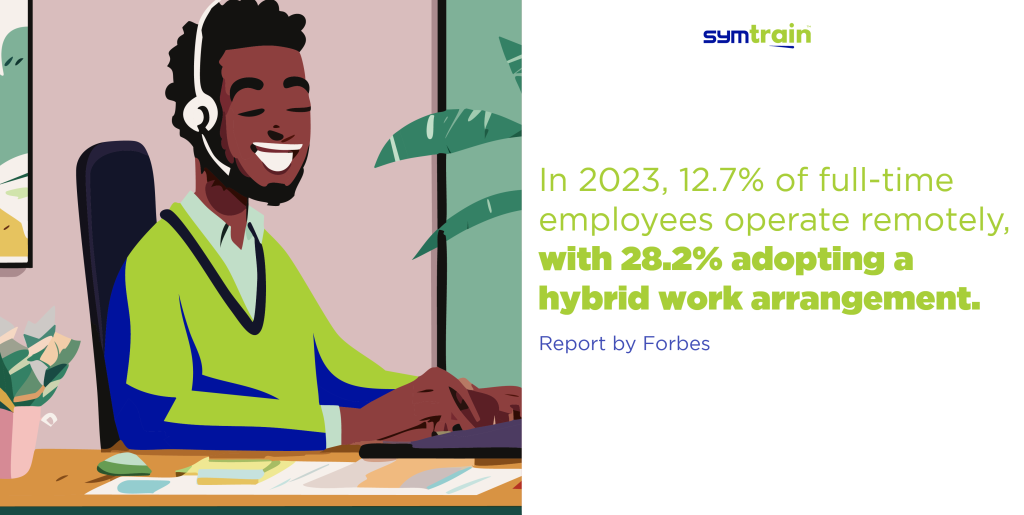
Failing to adequately prepare for training in a remote context is creating problems for many companies. According to Forbes, in 2023, 12.7% of full-time employees operate remotely, with 28.2% adopting a hybrid work arrangement. 

Does this sound familiar? How are you addressing WFH onboarding? 

Furthermore, 32.6 million Americans will work remotely by 2025. As with many fields, the widespread transition to remote work has fundamentally reshaped the context of the contact center industry. This transformation has brought forth a set of intricate challenges for both leaders and agents. At the forefront of these challenges lies the imperative task of adeptly training agents within the context of a remote work environment.  

Remote

The Complexities of Remote Agent Training 

  • Limited Situational Learning: We all know Role-Plays are THE #1 way to embed confidence and competence. Remote agents contend with a scarcity of genuine manager and peer interactions, which hampers their ability to learn from colleagues, amass practical experience, and evolve into self-assured, high-performing agents. The spontaneous exchange of knowledge is no longer viable, and the isolation experienced by many agents has hindered their progress. 
  • Accelerated Learning at a Distance: Traditional methods for remotely training new agents proved ineffective, protracted, and arduous. The customary extensive group or 1:1 training and support that previously expedited agent proficiency vanished within a remarkably short span. 
  • Supervision and Feedback Challenges: Overseeing remote agents and furnishing prompt feedback has become notably sluggish, unwieldy, and substantially more demanding compared to the centralized office setup. The dearth of timely feedback adversely affected agent performance and their prospects for enhancing skills. 
  • Scarcity of Real-World Scenarios: Numerous contact centers previously orchestrated in-person, lifelike customer interaction simulations to train agents prior to the advent of remote work. However, these ad-hoc solutions proved largely ineffective, leading to the shelving of many programs due to subpar training outcomes and an incapability to achieve efficient scalability. 

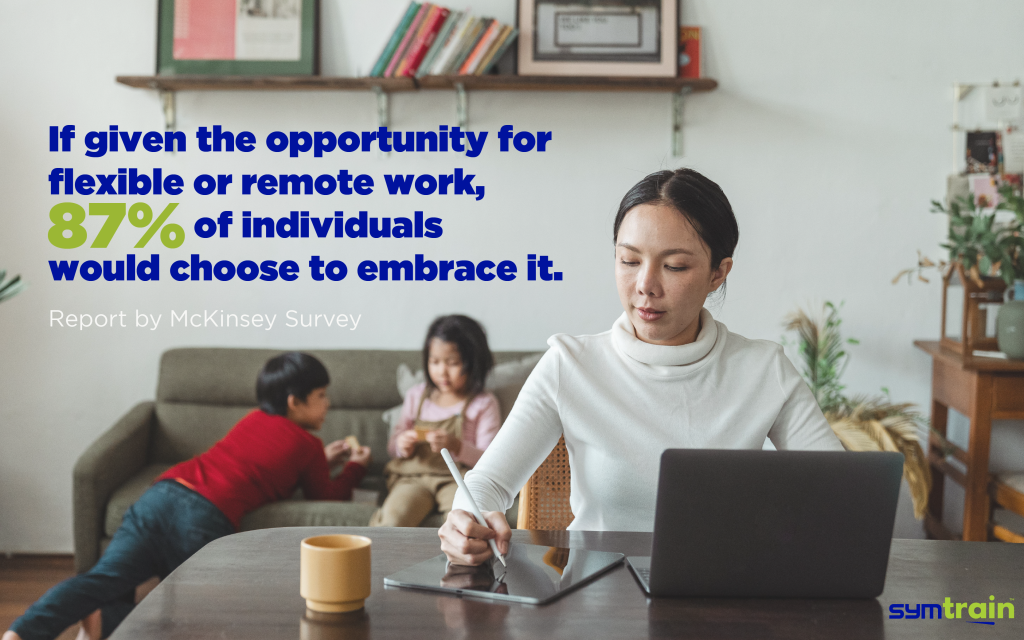
Notwithstanding, if done correctly, these challenges can be effectively addressed and used as an advantage, since remote training and working can have a positive impact on engagement. A McKinsey Survey showed that if given the opportunity for flexible or remote work, 87% of individuals would choose to embrace it.  

Remote

In that context, SymTrain places itself at the forefront of revolutionizing virtual training and therefore boosting remote work, introducing a paradigm shift in the realm of effective scalable training at a distance. 

SymTrain’s Advantages to Scale Automated Role-Play in a Remote Set-Up 

Additional to the following benefits, since it functions as and SaaS offering, the SymTrain platform is accessible to end-users through standard web browsers. This accessibility empowers teams across the globe to harness the solution’s advantages without necessitating extra IT support. 

A Streamlined Framework for Training Excellence 

SymTrain introduces a groundbreaking feature in the form of a streamlined training framework. This innovation not only ensures heightened consistency in criteria and feedback but also establishes a unified standard of achievement for all employees. The platform is perfect for remote environments since it facilitates progress comparison at both individual and group levels at a distance, enabling precise identification of areas for improvement based on standardized benchmarks. 

Time and Cost Optimization in Training 

SymTrain yields significant time and cost benefits. Remarkably, this transformative solution liberates training departments from exhaustive labor-intensive tasks. The time once dedicated to repetitive role-plays, performance evaluations, and feedback sessions is now liberated through automated processes that can be created and monitored at a distance.  

This empowerment permits trainers to focus on impactful activities that elevate overall performance. Through its AI-guided mechanism, SymTrain encourages employees to immerse themselves in skill-enhancing simulations, driving preparedness for real-time interactions. The creation of a Sym library further fortifies ongoing training, scalable for businesses of all scales. 

Empowering Employee Growth through Self-Paced Proficiency 

Empowering a diverse and remote team with varying learning paces can be complex. SymTrain surmounts this challenge with automated role-plays, fostering individualized support. Participants can immerse themselves in lifelike scenarios at any time anywhere, iteratively refining their skills. This autonomy to learn at a personalized pace nurtures confidence and proficiency among a broader spectrum of employees. 

SymTrain’s Role in Continuous Advancement 

Although it is also great for new-hire training, SymTrain’s prowess extends to continuous development. Automated role-plays can be swiftly deployed to your entire customer experience or sales team from a distance, catering to immediate training needs and upskilling initiatives.  

The platform becomes a catalyst for large-scale dissemination of annual HIPAA compliance training. The enduring value lies in the Sym library, an ever-accessible repository for practice and review. Quick-hit role-plays serve as targeted skill reinforcement tools, ideal for ongoing optimization. Furthermore, SymTrain adapts seamlessly to evolving processes and products, offering a digital infrastructure that elevates performance through effective and scalable training. 

Keep Exploring:

Accelerating Contact Center Onboarding with SymTrain 

Can you visualize cutting speed to green in half? How about lowering 90 day attrition by 35%? Would cutting retraining by 75% help?   

Speeding systematic high performing agent onboarding holds the key to addressing a major concern confronting modern contact centers: employee attrition. A special report by Contact Center Pipeline reveals that over a quarter of contact centers grapple with substantial attrition rates, even in the first 90 days, leading to issues such as prolonged call queues, decreased average handling time (AHT), and ultimately, a drop in customer satisfaction (CSAT) levels.  

onboarding

That is the reason why innovative brands with strong L&D teams have started to look for ways to bridge staffing shortfalls arising from attrition, ensuring the seamless flow of business operations. To tackle any of these evolving obstacles, a burgeoning range of inventive onboarding and training solutions has emerged, aimed at expediting the learning curve and swiftly orienting new hires.  

Amongst those, automated role-play is one that easily provides tailor-made, immersive learning journeys, empowering agents to rapidly grasp the expertise required for effective customer interactions. 

5 Ways SymTrain’s Automated Role-Play Accelerates Speed to Proficiency and Onboarding  

The SymTrain solution automates audio transcription, sentiment analysis, and content generation, enabling users to swiftly produce and launch top-notch Syms. Five effective ways to use this advantage to accelerate speed to proficiency are:  

Adaptive Learning Pathways  

SymTrain tailors learning pathways based on individual progress and identified areas of improvement. This adaptability ensures a personalized and efficient learning journey, allowing to roll out new processes and resolve communication challenges within hours, culminating in quicker proficiency attainment. 

Immersive Real-Life Rehearsal Environment 

SymTrain offers an immersive environment for new hires to rehearse authentic customer interactions, fostering swift confidence-building and skill development. With the platform, leaders and trainers can create “new training” from call recordings, audio upload, or direct record. This preparation surpasses traditional methods, enabling quicker readiness for real customer engagements. 

Instant Performance Feedback 

Through simulation training, real-time feedback on performance aids new hires in promptly recognizing and rectifying errors. SymTrain curbs the development of unfavorable habits and expedites the learning curve, building confidence and competence. 

Iterative Mastery 

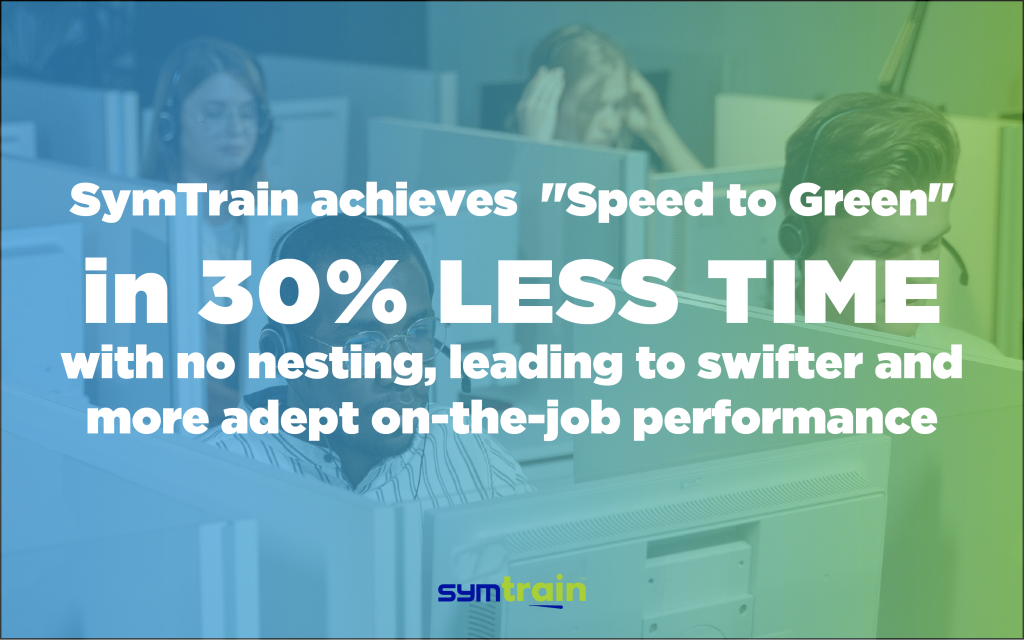
Symtraining enables new hires to repeatedly rehearse diverse customer scenarios, cultivating mastery over the essential skills. Practicing a wide spectrum of scenarios fosters muscle memory and allows “Speed to Green” in 30% less time, with no nesting, leading to swifter and more adept on-the-job performance. 

onboarding

Insights from Data Analytics

Symtraining tracks vital performance metrics like specific keywords, tone and confidence, allowing agents to achieve an increase of CSAT that can reach 12-15%. By leveraging this data, areas necessitating supplementary training or support are pinpointed, guiding adjustments in the onboarding process orchestrated by contact center leaders. 

Learn More:

Agent Retraining: The True Expense of Attrition 

For every Business Process Outsourcing (BPO) company, the need for agent retraining is a recurring challenge with a notable impact on profitability. Replacing and retraining agents who leave is resource-intensive and costly, especially because BPO companies often do not receive compensation for retraining, involving the replacement of agents who quit with fully proficient agents to maintain headcount. In today’s competitive marketplace, it has become customary for BPOs to bear 100% of the replacement and retraining costs due to attrition among agents. 

When an agent departs during week 3 of training, the consequences are twofold. The BPO loses all production revenue generated by that agent, and they must initiate the recruitment process anew, involving hiring, onboarding, and provisioning, alongside covering 100% of the expenses to replace each attritted agent. What’s more, this setback resets the clock on revenue attainment. It’s a significant problem! 

This is why SymTrain has forged a partnership that is reshaping the rules of agent retraining. Our BPO Partners are not only saving millions of dollars related to retraining but also simultaneously creating an entirely new revenue stream. What is currently the most substantial drain on your BPO’s margins can potentially become a profit center in the near future. 

Retraining = The killer costs of agent attrition 

For BPO companies, agent attrition is a relentless financial drain, involving not only retraining costs but also enduring downtime as agents are diverted from their regular duties. The departure of experienced agents results in: 

1. Recruitment Costs: Finding suitable replacements is time-consuming and expensive, involving job postings, interviews, and hiring processes. 

2. Training Expenses: New agents must undergo comprehensive training, which includes classroom sessions, workshops, and role-play exercises that are almost always paid for by our BPO partners. 

3. Loss of Productivity: The gap between an agent’s departure and a new agent’s readiness leads to reduced productivity, affecting client satisfaction and revenue. 

4. Diminished Agent Performance: New agents often take time to adapt, leading to errors and lower-quality service, which can harm client relationships. 

The Transformative Partnership 

Introducing SymTrain, an innovative provider of simulation-based training solutions. Recognizing the need to mitigate the financial impact of agent attrition, SymTrain developed a groundbreaking BPO Partner program that harnesses its cutting-edge technology to address this long-standing challenge while delivering a solution that allows BPOs to profit from its implementation rather than incurring additional expenses. 

SymTrain’s simulation-based training leverages artificial intelligence, machine learning, and data analytics to craft immersive, lifelike scenarios directly from your call recordings. Agents now have the opportunity to engage in hyper-realistic role-play exercises that closely replicate actual client interactions, significantly enhancing learning outcomes. For every 1,000 agents that a BPO must replace and retrain, they save a substantial million dollars or more with the following: 

1. Greater Retention: Simulation-based training captivates agents’ attention and deepens their understanding of their roles, leading to increased retention. As a result, there’s a reduced need for frequent retraining due to attrition. 

2. Faster Learning: The immersive, scenario-based training approach accelerates agents’ learning curve. They become proficient more quickly, minimizing the downtime associated with new hires. 

3. Reduced Resource Costs: Automation and simulation-based learning reduce reliance on physical resources such as classrooms, trainers, and printed materials, resulting in substantial cost reductions. 

4. Improved Agent Performance: Agents who emerge from simulation-based training are not only better prepared but also more confident and capable. This translates into higher-quality service, client satisfaction, and fewer errors. 

Beyond Cost Savings: Creating a Profit Center 

The benefits of this partnership transcend cost savings. By embracing simulation-based training, a BPO nurtures a client-centric culture where agents are better prepared to handle real-world scenarios, adapt swiftly to evolving client demands, provide higher-quality service, and minimize errors. The enhanced performance of agents leads to improved client satisfaction, client retention, and referrals, further bolstering revenue. 

BPO clients have noted a significant enhancement in service consistency and responsiveness, reinforcing the value of this innovative approach. Simulation-based training has not only proven to be a financial boon for BPOs but has also transformed their agents into highly skilled, adaptable, and customer-focused professionals who are motivated to retain their positions and grow. As BPO companies worldwide grapple with attrition-related challenges, innovative solutions like SymTrain are emerging as the key to enhanced profitability and operational excellence.  

Combine these outcomes with a BPO-centric partnership designed to establish a profit center rather than a cost center, and teaming up with SymTrain becomes a seamless addition to your tech stack. 

Learn About SymTrain’s Success:

Considering Automating Coaching?

At what expense and benefit?   

The allure of AI has been hitting contact centers for a few years with the promise of replacing headcount and replacing processes. One instance where this promise has come into fruition is AI driven results in quality assurance. Adopters may now analyze every call instead of 1% or 2% of them.  

However, such a tool comes at a significant cost. There are other areas where AI has created significant buzz without many noteworthy results such as automated chatbot responses. We anticipate these obstacles will be overcome but require a deal of work to get there. 

Where AI is really making an impact is in helping your agents perform better. The only technology which has exposed this value proposition to date is SymTrain. The tools delivered by SymTrain automates coaching and role play exercises to help coach agents based on their actual job performance and call recordings. Agents are trained by rehearsing scenarios which mirror the type of customer interaction faced while in-role. Additionally, these solutions are used by managers.

As with any investment in new technology one of the most important points of analysis is Return-on-Investment. SymTrain has developed a method of calculating the ROI based on various industry specific factors.  

This calculation requires a benchmarking effort based on the cost of the total agent population including both direct employees and your BPO resources. After determining the total span of control that includes all team leaders, supervisors, managers and directors, one must factor in various operational costs and synergistic savings.   

These calculations will give you total loaded costs for each agent, and you can differentiate for a $15/ hour employee costs $25/ per hour while a $15/ hour BPO agent may only cost $18 or $20 along with a standard cost for managers, facilitators, SMEs, and team leaders. 

To complete the benchmarking exercises, you must consider the following:   

  1. Starting with coaching you need to determine what the current coaching cadence is for each employee and total employees. How many coaches, managers, team leaders, SMEs, or facilitators are dedicated to coaching, and what is the related time and cost associated with these efforts along with impact of total improvements across the board from coaching. 
  1. For training purposes, it is essential to assess your existing process for each employee, cohort, or class, as well as the collective data for all employees. Additionally, you should determine the average duration of onboarding training, the typical class size, the total number of annual classes, and the projected number of new hires, factoring in in-class attrition (30-, 90-, 180-, and 360-day attrition) as well as any anticipated growth due to business expansion or seasonal demands.  
  1. For assessment you need to determine total resumes, phone screens, interviews, offers, and 1st day arrivals required to maintain capacity planning requirements and the current cost to deliver.   

Once you’ve achieved benchmarking, gaining insight into how SymTrain reduces costs, enhances performance, and contributes to the business requires the following: 

  1. Coaching: Have we improved performance across the board, reduced 90-day, 180-day, and 360-day attrition, while subsequently increasing supervisor span of control? 
  1. Training: Have we reduced onboarding training days to proficiency? 
  1. Assessment: Have we reduced no shows, increased non acceptances, and improved good onboarding attrition with early-applicant-testing? 

Conducting a comprehensive analysis lays the foundation for measuring the impact of SymTrain on your business. 

Explore More:

AI’s Role in Learning and Development 

According to the U.S. Patent And Trademark Office If you haven’t adopted AI, you’re falling behind.  In 2023 alone, the size of the worldwide artificial intelligence market has reached an estimated value of $150.2 billion, as highlighted by the insights of research firm Markets and Markets. Projections indicate a compelling growth trajectory, with an anticipated growth rate of 36.8% spanning the years from 2023 to 2030. 

AI’s positive impact spans a diverse array of sectors: optimizing logistics, facilitating research, furnishing translations, or enhancing customer service in contact centers. Its influence permeates nearly every domain, leaving virtually no arena untouched.  

Meanwhile, the educational landscape benefits from AI implementation at all tiers, extending beyond instructional roles to encompass various systems shaping academia. Furthermore, AI has gained significant ground within companies for employee training, with a multitude of businesses seamlessly integrating AI tools into their learning strategies for comprehensive Learning and Development. 

AI Can Fill Knowledge Gaps 

Many corporate learning methodologies revolve around comprehensive instruction. In simpler terms, they employ uniform course materials for all staff members. Yet, the reality remains that each employee possesses unique attributes. There are those who may already possess skills essential to their roles. Therefore, compelling them to acquire mastery in familiar areas proves to be a less-than-optimal approach. 

Enter AI, a technology capable of dissecting immense datasets and drawing insights through techniques such as machine learning or generative models. Prominent online training providers harness AI to gauge learner performance, competencies, and knowledge voids within an organization. Once these gaps are illuminated, the Learning and Development team can adapt their training strategies to bridge these knowledge disparities. This not only elevates the efficacy of learning but also safeguards precious employee hours from being squandered. 

AI Can Customize Coaching 

AI possesses the capacity to tailor learning experiences in accordance with an individual’s rhythm and age. It can seamlessly dispense learning materials to the learner on a progressive basis, synchronizing with their completion of modules. 

For example: a company aims to provide targeted training in customer management for a seasoned employee. AI can autonomously assess the employee’s skill set and bypass elementary training content, proposing instead advanced resources. By discerning and tracking learning styles, AI can fine-tune the learning journey for optimal outcomes. This individualized approach to learning facilitates enhanced knowledge retention, heightened recall, and overall improved mastery of subject matter. 

Automated Role-Play to Fill Gaps and Customize Coaching  

The optimal strategy for contact center leaders to empower their agents for enhanced performance revolves around ensuring their access to the most efficacious training techniques. Tested approaches such as immersive simulation training pave the way for agents to excel in their roles with heightened competence. 

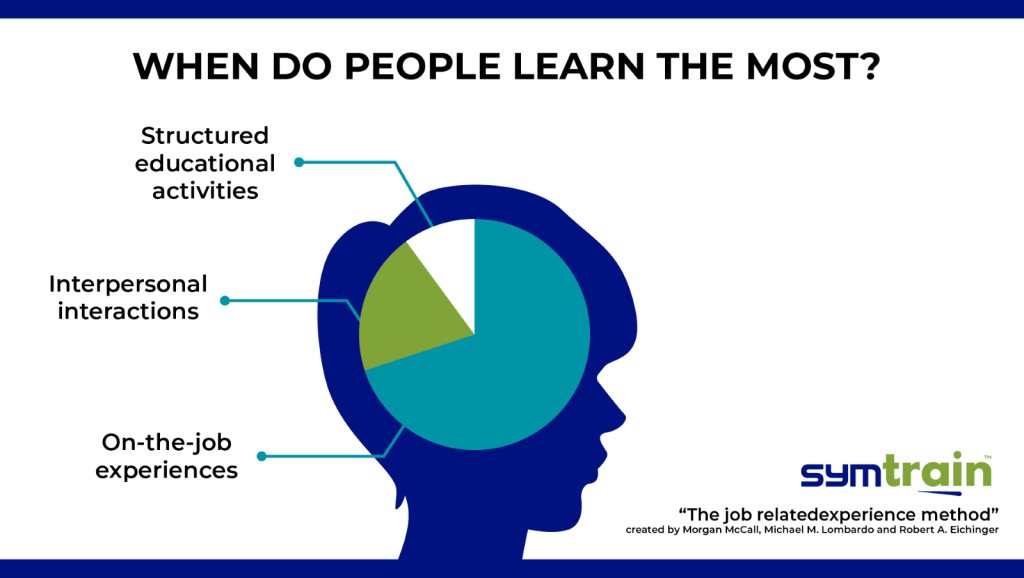
In the present day, AI holds the potential to guide contact center agents in assimilating intricate proficiencies through hands-on experiential learning. Anchored in the principles of “The job related experience method”, created by Morgan McCall, Michael M. Lombardo and Robert A. Eichinger, it is known that individuals learn most effectively by actively engaging. This method, that goes by 70-20-10, posits that individuals acquire 70% of their knowledge through on-the-job experiences, 20% from interpersonal interactions, and 10% from structured educational activities. 

Following this model, AI-powered simulation training is able to provide contact center leaders with a means to thoroughly prepare new hires even before their initial interaction with a live customer or prospect. Moreover, experienced agents can utilize this approach to cultivate new competencies and bridge any existing skill gaps. 

A Case for SymTrain 

Experiential and interactive learning pathways are empowering contact center agents to truly excel in their roles. At prominent global brands, these agents are already refining critical soft skills and mastering the art of delivering empathetic and exceptional customer experiences through the innovative SymTrain AI-powered simulation training. 

In a remarkable testament to its efficacy, SymTrain has been shown to yield substantial performance enhancements within a mere six-week timeframe, boasting an impressive 4% improvement. Furthermore, its influence extends to the realm of conversion rates, where SymTrain fuels an exceptional upswing of 15%.  

With Coach Sym, agents engage in lifelike conversations that mirror a range of customer and prospect scenarios. This immersive experience not only hones their tone and soft skills but also guides them with coaching on best practices and essential approaches throughout the entire simulation training.  

The impact of SymTrain is equally felt in streamlining onboarding processes, drastically reducing the timeline by a significant margin of 50-70%. Remarkably, this cutting-edge solution consistently drives double-digit growth in conversion rates, achieving a remarkable surge of 10-15%. 

So when it comes to L&D, every contact center should dedicate ample time to implementing AI-powered solutions for training and coaching enhancement, tailored to the specific requirements of their training initiatives. Amidst this pursuit, certain fundamental metrics should invariably take precedence when crafting a comprehensive agent training program with automated role-play. 

Continue learning: