Agent Productivity with SymTrain 

One of the key metrics which defines operational efficiency in a contact center is the occupancy rate. Occupancy rate refers to the percentage of time agents spend handling customer interactions compared to their available time. This metric is crucial as it directly impacts both agent productivity and customer satisfaction. High occupancy rates indicate that agents are actively engaged in customer interactions for the majority of their time, while lower rates may suggest underutilization of agent capacity.  

According to research by Aberdeen, contact center agents can spend up to 25% of their time idle. While some idle time is necessary to prevent agent burnout and ensure readiness for incoming interactions, excessive idle time can signal inefficiencies and result in lost productivity. The key is leveraging idle time to upskill and crossskill your agents. 

Balancing occupancy rates and managing idle time effectively are critical challenges in contact center management. Too high an occupancy rate can lead to agent burnout and decreased quality of customer service, while too low a rate indicates inefficiencies and missed opportunities for agent engagement and skill development. 

The integration of SymTrain’s immersive AI learning during these idle periods opens up new avenues for enhancing agent performance and operational efficiency. Consider a contact center with a large workforce. In such an operation, effectively managing idle time is not just a matter of individual productivity but can have a substantial impact on the overall performance and customer service quality. By utilizing SymTrain during these idle moments, a significant portion of the workforce can really impact their performance. For instance, if SymTrain helps 50% of these agents move from average to excellent, the ripple effect on customer service quality and business outcomes can be monumental. 

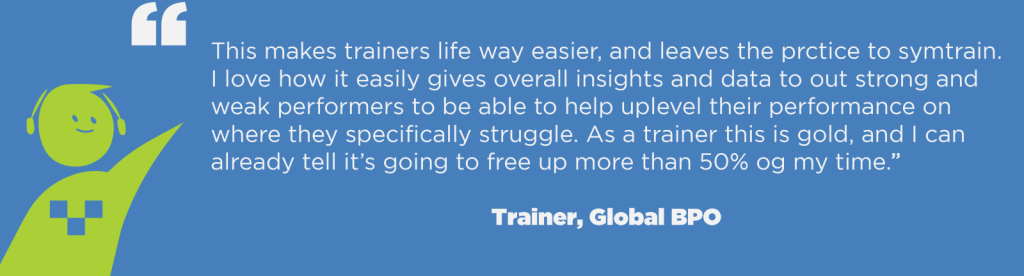
This makes trainers’ life way easier, and leaves the practice to SymTrain. I love how it easily gives overall insights and data to our strong and weak performers to be able to help uplevel their performance on where they specifically struggle. As a trainer this is gold, and I can already tell it’s going to free up more than 50% of my time, Trainer, Global BPO.

SymTrain’s role in this transformation is unparalleled. Its interactive and immersive training modules provide agents with the opportunity to refine their skills and knowledge in real-time scenarios. This method of on-the-job training ensures that agents are not only more prepared to handle customer interactions but are also continuously improving their performance. The shift in performance levels among a large portion of the workforce, translates into enhanced overall service quality, higher customer satisfaction rates, and ultimately, better business results. 

Thus, SymTrain not only optimizes the idle time in contact centers but also becomes a key contributor to elevating the entire operation’s performance.  
Tips and Tricks

Tips and Tricks: Valuable Data from SymTrain Reporting

In a recent session led by Tanveer Ahmed, Implementation Manager at SymTrain, valuable tips were shared on how SymTrain’s reporting can be leveraged to gain deeper insights into agent performance. Ahmed, emphasized the importance of operational KPIs and how they can be effectively monitored and enhanced through SymTrain’s reporting capabilities.

  1. Understanding Agent Engagement with Simulations: One of the first insights SymTrain reports provide is whether trainees are engaging with the simulations (Syms). By analyzing data, trainers can identify which simulations are not being attempted, leading to potential root cause analysis and necessary adjustments.
  2. Performance Analysis over Time: SymTrain’s reports allow for detailed comparison of performance on a weekly, monthly, or yearly basis. This helps in understanding trends and making informed decisions about training strategies.
  3. Addressing Specific Training Challenges: For instance, addressing increased wrap-up times identified in reports. SymTrain helped a client reduce wrap-up times by integrating coaching tips into their simulations, reminding agents to complete account notes efficiently.
  4. Customization for Varied Client Needs: The platform’s versatility was highlighted through its ability to cater to different client expectations, including those from BPOs who are keen on tracking KPI progress.
  5. Enhancing Training Quality and Trainer Performance: SymTrain not only monitors agent performance but also the effectiveness of trainers. By analyzing which trainers’ simulations are most effective, it provides insights into training quality and areas for improvement.
  6. Operational Impact of Simulations: The ultimate goal of SymTrain’s simulations is to positively impact operational KPIs such as Average Handle Time (AHT), script adherence, and keyword utilization. The reporting helps in refining simulations that are not meeting these objectives.

We invite you to watch the insightful video of the session, so you don’t miss the critical aspects of extracting and interpreting valuable data from various SymTrain reports to enhance agent performance.

Tips & Tricks

Tips and Tricks: Successful Deployment of SymTrain

In the recent Tips and Tricks session on Strategic Deployment of SymTrain, Kalpana Verma, Senior Implementation Manager at SymTrain, provided valuable insights on effectively deploying the SymTrain platform. 

Effective planning for deployment is critical to ensure successful implementation and optimal utilization of SymTrain. This process begins with a thorough needs assessment to understand the specific training requirements of the organization. It’s important to align the deployment with organizational goals, ensuring that the platform addresses the current and future training needs. 

Here are the key takeaways:

  • Objective Clarity: Begin with a clear understanding of current performance challenges to tailor the deployment of SymTrain effectively.
  • Identify Training Needs: Determine specific training objectives and ensure they are in line with organizational goals.
  • Stakeholder Engagement: Select a focused group of users such as Sym creators, managers, and trainers based on performance and training needs.
  • AI Coach Integration: Provide comprehensive walkthroughs of the AI Coach to demonstrate SymTrain’s capabilities and the value it adds to the organization.
  • User Onboarding: Engage users through detailed training sessions, ensuring they are well-acquainted with SymTrain’s features.
  • Communication and Support: Establish a communication strategy outlining support structures and steps for resolving technical issues.
  • Launch Strategy: Finalize and communicate the launch date, and prepare the technical environment by whitelisting necessary URLs.
  • Access Management: Define the login procedures and assign relevant simulations to designated groups to facilitate a smooth start.
  • Quality Assurance: Conduct extensive system testing with all users and supervisors to ensure functionality and address any issues pre-launch.
  • Feedback Loop: After the launch, maintain a feedback loop to monitor user experiences and make adjustments as needed for continuous improvement.

The session was insightful, focusing on practical strategies for optimizing the deployment of SymTrain in organizational settings. If you need to watch it again take a look at the video:

Tips & Tricks

Tips and Tricks: QA Scorecards to Enhance Agent Performance

In the most recent SymTrain Tips and Tricks session hosted by Kali Sarim, Director of Sales & Business Development at SymTrain, the focus was on the innovative use of Quality Assurance (QA) scorecards for enhancing customer service agent performance. This session highlighted how SymTrain’s tools can be leveraged for more efficient, targeted, and data-driven coaching.

Strategic Use of QA Scorecards: The session underscored the importance of using QA scorecards not just as a tool for assessment, but as a foundation for building training simulations. These simulations, or Syms, can be tailored to address specific performance metrics and pain points identified in the scorecards.

Building Effective Syms: A crucial aspect discussed was the process of creating simulations that closely align with the elements of QA scorecards. This method ensures that the training is directly relevant to the areas where agents need improvement, making the coaching more efficient and impactful.

Identifying Pain Points: The session highlighted the importance of identifying the biggest gaps in performance as a starting point. By focusing on these areas, organizations can use SymTrain to address the most critical needs first, leading to more immediate and noticeable improvements in agent performance.

Customized Coaching Opportunities: The versatility of SymTrain was showcased through its ability to provide customized coaching opportunities. The platform allows for the creation of various scenarios, enabling agents to practice and improve on specific areas of weakness as identified by their QA scorecards.

Simplifying Content Creation: An important feature of SymTrain discussed was the ease of creating and modifying content. Users can easily upload scripts and integrate key components, such as specific keywords, into the Sims, streamlining the process of custom training development.

Modular Training Approach: The session demonstrated how agents could be assigned modules that follow the entire QA process. This modular approach allows for sequential learning, ensuring agents understand each step of the call process comprehensively.

Targeted Assignments for Improvement: The capability of SymTrain to assign specific simulations or modules to teams or individual agents based on their QA scorecard performance was highlighted. This targeted approach ensures that the training is relevant and focused on areas requiring attention.

Encouraging Continuous Evolution: The platform encourages an ongoing evolution of content creation, allowing for the constant updating and refining of training materials to keep pace with changing needs and performance goals.

The Tips and Tricks session provided valuable insights into how QA scorecards can be more than just evaluative tools. By integrating them with SymTrain’s versatile training capabilities, organizations can create a more dynamic, efficient, and targeted approach to agent training and performance improvement. If you missed it, or you want to check it out again watch the video here: 

Tips & Tricks

Tips and Tricks: Training for All Skill Levels

The contact center industry is continuously evolving, demanding more efficient and effective training methods for agents. That is why the most recent Tips and Tricks hosted by Jim Madden, Chief Operating Officer at SymTrain, pioneer in AI-powered training solutions, provided valuable insights and showcased innovative approaches in this domain.

Rapid Deployment and Immediate Value: The session emphasized SymTrain’s ability to quickly deliver practical value. This focus on rapid deployment highlights the platform’s efficiency in creating and implementing training simulations, offering immediate benefits to organizations.

Ease of Customization: Flexibility and adaptability were key themes, with the platform allowing easy modification of simulations. This feature is especially useful for tailoring training materials to specific industries and various proficiency levels, ensuring that training is relevant and targeted.

Extensive Simulation Libraries: SymTrain’s capability to quickly generate a broad array of simulations was showcased, emphasizing the platform’s wealth of resources. This enables users to access diverse training scenarios, ensuring comprehensive coverage of potential customer service situations.

Advanced Simulation Formats: The session featured an advanced video simulation, demonstrating SymTrain’s commitment to diverse learning formats. This approach caters to different learning styles and training needs, making the platform versatile and effective.

Interactive Learning Environment: The platform’s interactive nature was a focal point, underscoring the importance of engagement and realistic responses in training. This interactivity enhances the learning experience, making training more effective and memorable.

Navigating Technical Challenges: Insights into overcoming technical challenges within the platform were provided, showcasing its intuitive design. This aspect is crucial for maintaining smooth training sessions and ensuring that users can focus on learning without technical distractions.

Training for All Skill Levels: The platform’s ability to cater to various skill levels, from beginners to advanced users, was discussed. This flexibility ensures that every agent, regardless of their current proficiency, has access to appropriate and effective training resources.

Audience Engagement and Feedback: The session’s interactive format, including Q&A segments, highlighted the significance of direct audience engagement. This approach fosters a more dynamic and responsive learning environment, allowing for immediate feedback and clarification.

Versatile Learning Formats: The discussion about both video and audio-only simulations underlined SymTrain’s adaptability. This feature ensures that the platform can meet a wide range of training preferences and requirements, further enhancing its effectiveness.

We invite you to delve deeper by watching the video of SymTrain’s recent session. This workshop offers a comprehensive view of the innovative strategies and features discussed, providing a firsthand look at how AI-powered training can really transform your approach to learning and development.

SDWS: Harnessing GenAI and Coaching Plans

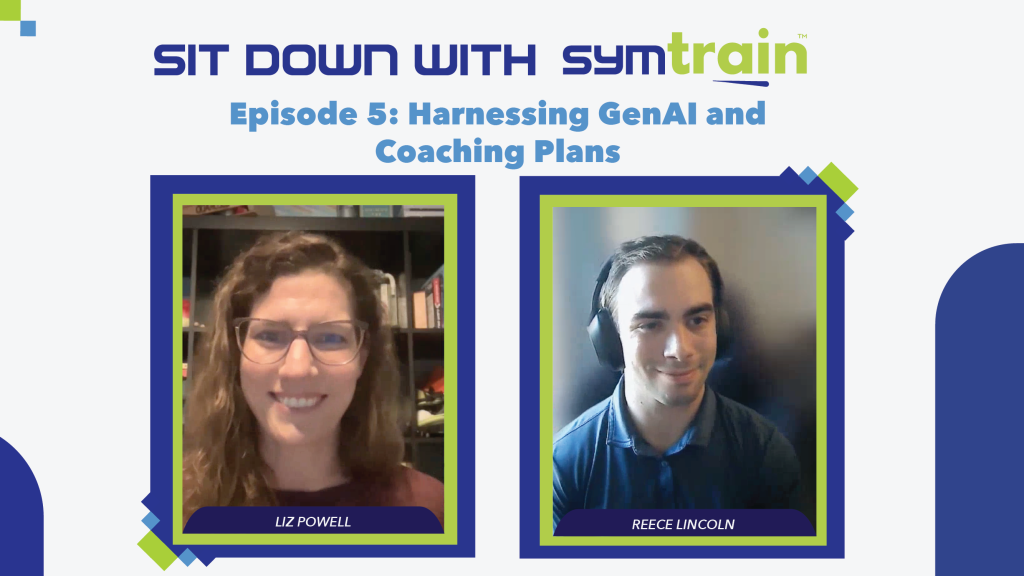
In the insightful latest episode of Sit Down With SymTrain: Harnessing GenAI and Coaching Plans, Liz Powell, VP of Customer Operations, and Reece Lincoln, AI/ML Technical Lead at SymTrain, explored the transformative role of generative AI in contact center training and coaching.

  • Realistic Training Scenarios: The focus was on moving beyond traditional, scripted training methods. The new approach emphasizes simulations that reflect the unpredictability and complexity of actual customer interactions, preparing agents for a variety of real-world scenarios.
  • Handling Challenging Conversations: Special attention is given to training agents in managing difficult calls. This aspect is particularly crucial for seasoned agents, equipping them with strategies to navigate complex interactions effectively.
  • AI-Driven Performance Insights: Utilizing AI to analyze extensive performance data helps identify successful patterns and behaviors. These insights are vital in crafting more effective and personalized coaching plans.
  • Optimizing with AI in Data-Rich Environments: The data-intensive nature of contact centers makes them ideal for implementing AI. This technology can drive significant insights, enhancing both the training process and outcomes.
  • Evolving Coaching Strategies: AI technology is reshaping traditional coaching methods. By integrating AI insights into coaching plans, training becomes more adaptive, targeted, and efficient.

This webinar represents a crucial step forward in understanding how AI can crucially impact training and coaching in contact centers. For a deeper look into these innovative strategies, be sure to watch the full video of the session, where these concepts are explored in detail, promising a significant impact on the future of agent training.

Tips and Tricks

Key Insights from the Tips and Tricks Session

The first SymTrain Tips and Tricks session, conducted by Jamie Leckband, our Customer Success Manager, offered a detailed view into the innovative application of AI in the contact center domain. This session centered on the utilization of SymTrain’s GenAI feature, a pivotal tool for dynamically enhancing the creation of training and coaching content.

A key focus of the session was the newest GenAI feature within SymTrain’s platform. This innovative tool allows for the customization of training scenarios, equipping agents to handle a diverse array of customer interactions. GenAI’s adaptability not only prepares agents for various real-world scenarios but also promotes a tailored and impactful learning journey.

  • Script Delivery and Adaptation: The importance of evolving beyond simple script recitation was underscored. Mastery over the conversation’s structure can significantly boost an agent’s confidence and their ability to manage actual customer interactions.
  • Concentration in Communication: The need for complete engagement in conversations was also highlighted. Active listening and empathy were identified as critical elements for genuine customer interactions, skills that agents can develop through regular practice with SymTrain’s features.
  • Understanding Energy in Interactions: An insightful takeaway was the discussed perspective on ‘energy’ in communication. Leckband clarified that it’s not about the extremities of energy levels, but rather about the appropriate sense of urgency, which should be aligned with the customer’s emotional state.
  • Tailored Content Generation: One of the most significant advantages of content creation with generative AI is its ability to produce highly tailored content that caters to diverse learning styles and needs. Generative AI enables the creation of customized training modules. This personalized approach ensures that each trainee receives content that is most effective for their unique learning journey, leading to more efficient and impactful training outcomes.
  • Dynamic Scenario Creation: Generative AI excels in creating dynamic and realistic scenarios that closely mimic real-world situations. This feature is particularly beneficial for training in fields where experiential learning is crucial, such as customer service or emergency response. By generating a wide array of scenarios, trainees can be exposed to numerous potential challenges they might face, equipping them with the practical skills and confidence needed to handle complex situations.

The session demonstrated how tools like GenAI are transforming the contact center industry top to bottom. By enabling personalized training experiences and fostering essential communication skills, such tools are preparing agents to meet the evolving demands of customer service. This progression not only enhances the quality of customer interactions but also sets a new standard in the industry for agent training and customer satisfaction.

If you missed the opportunity to attend our Tips and Tricks session, worry not! We invite you to experience the full breadth of insights shared during the session by watching the recorded video. It’s a resourceful watch for anyone interested in understanding the nuances of AI-powered training in the contact center industry. Whether you’re a seasoned professional or new to the field, the session offers valuable perspectives and actionable strategies.

Precision in Agent Assessment: The Key to a Winning Team

Selecting the right individuals to join a contact center team is a critical undertaking, essential for delivering exceptional customer service and maintaining operational efficiency.  However, the process of assessing and hiring agents for these roles is not without its inherent challenges.  

Contact centers, often at the frontline of customer interactions, require individuals who possess a unique blend of skills, including communication abilities, problem-solving acumen, and the capacity to remain composed in demanding situations. Navigating this intricate hiring process is fraught with complexities.  

From evaluating technical proficiencies to gauging soft skills and cultural fit, contact center assessments must be comprehensive and rigorous.  

While it’s essential to ensure that candidates possess the technical proficiency to navigate complex systems and processes, it’s equally crucial to gauge their soft skills, such as communication, empathy, problem-solving, and adaptability.  

The challenge lies in finding individuals who not only meet the technical requirements but also align with the organization’s culture and can excel in the demanding and often high-stress environment of a contact center. Additionally, accurately predicting how well a candidate will handle real-life customer interactions is a complex task, as it requires a holistic evaluation encompassing both their hard and soft skills. Striking this balance and conducting assessments that provide a comprehensive view of a candidate’s suitability is an ongoing challenge that contact centers strive to address. 

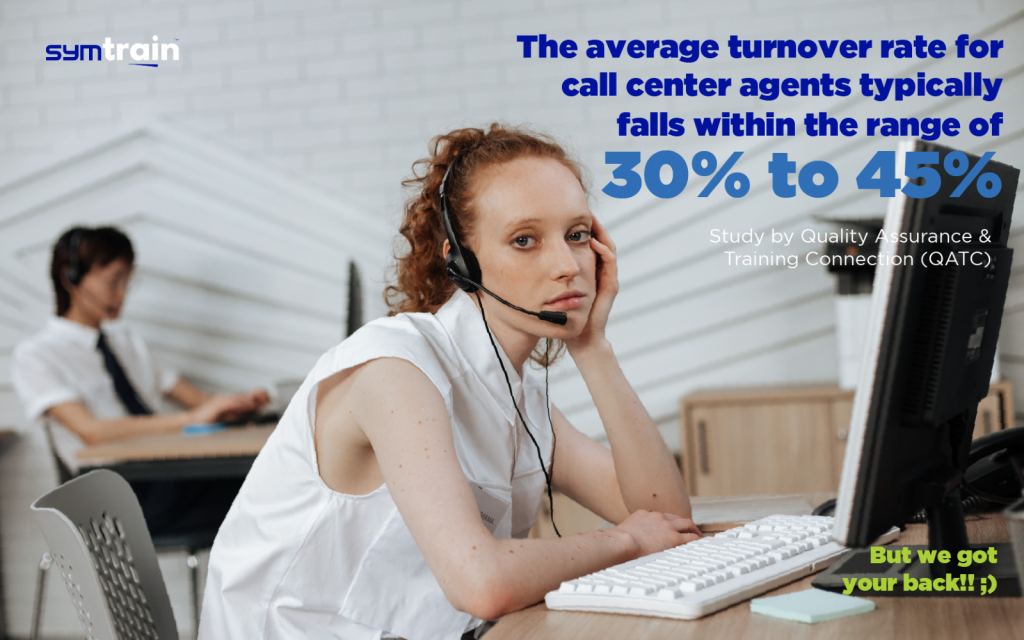
The significance of efficient and systematic assessment for high-performing agents is underscored by a pressing challenge that plagues contemporary contact centers: employee attrition. According to a study by Quality Assurance & Training Connection (QATC), the average turnover rate for call center agents typically falls within the range of 30% to 45%.  

This attrition not only exerts a detrimental impact on the workforce but also precipitates a cascade of issues, such as prolonged call queues, decreased AHT, and ultimately, a decline in CSAT levels. This scenario is, in part, a reflection of the difficulties in accurately assessing and selecting the right agents, necessitating a more effective approach to address this ongoing challenge. 

SymTrain customizes learning paths by taking into account an individual’s progress and pinpointed areas in need of enhancement, proving crucial for coaching. This adaptability guarantees a tailored and effective learning experience, enabling the swift implementation of new procedures and the resolution of communication obstacles in a matter of hours. Ultimately, this approach expedites the achievement of proficiency. 

Furthermore, when it comes to assessing the right candidates, SymTrain’s GenAI feature aligns seamlessly with the assessment needs of companies, enabling them to design scenarios to evaluate potential agents’ capabilities effectively. This facilitates the process of creating training content, enabling users to input their specific instructions and instantly generate scripts for various industries and interactions. 

“The insights we get from SymTrain reports are incredibly valuable. They allow us to look into individual agents and teams, making it easy to pinpoint the areas where our agents excel the most.” – Angie Salto, Training Director at The Call Gurus.

From an assessment perspective, this means companies can effortlessly generate “Syms” to gauge the future performance of agents, whether they are destined for a particular industry, line of business, or a specific communication channel, be it through audio simulations or chat interactions. These diverse scenarios serve as a comprehensive evaluation tool.  

Consequently, as agents engage with these assessments, they receive scores that guide them toward roles that best match their demonstrated skills and proficiency. For instance, based on their scores, an agent may be identified as ideal for supporting voice customers in the financial services sector, signifying that they have successfully navigated a series of simulations tailored to the specific requirements of that role. The use of SymTrain’s GenAI feature in assessments offers significant advantages, making it an essential component in this critical domain. 

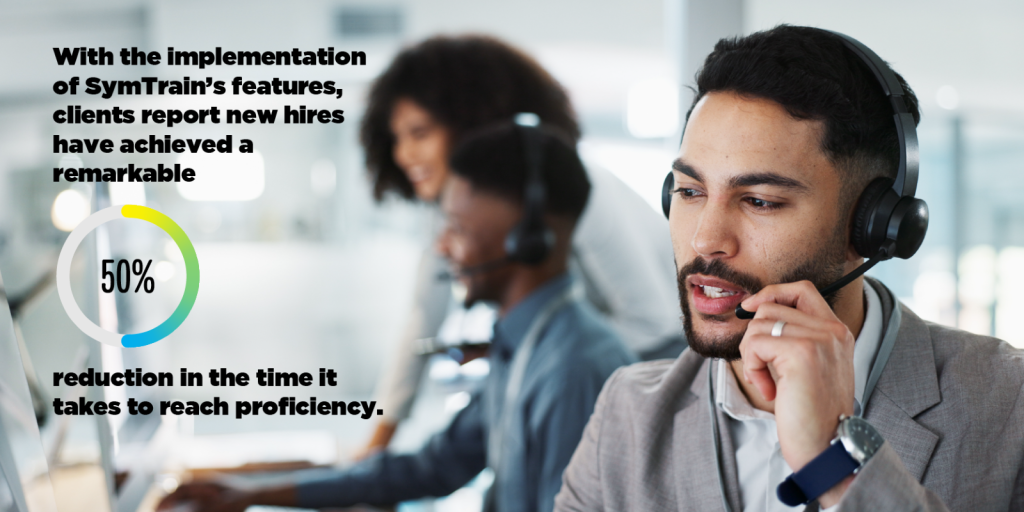
With the implementation of SymTrain’s features, clients report new hires have achieved a remarkable 50% reduction in the time it takes to reach proficiency, allowing trainers and SMEs to dedicate more of their time to client-facing delivery. 

SymTrain has thus proven itself as an invaluable asset in optimizing agent assessment and onboarding to achieve top performance and therefore elevating client satisfaction. 

Transforming Contact Centers with AI Coaching 

The power of innovation continues to reshape our lives in unprecedented ways. Among the myriad of transformative possibilities, the integration of AI simulation software stands out as a game-changer, offering newfound efficiency in employee training and a heightened customer experience.  

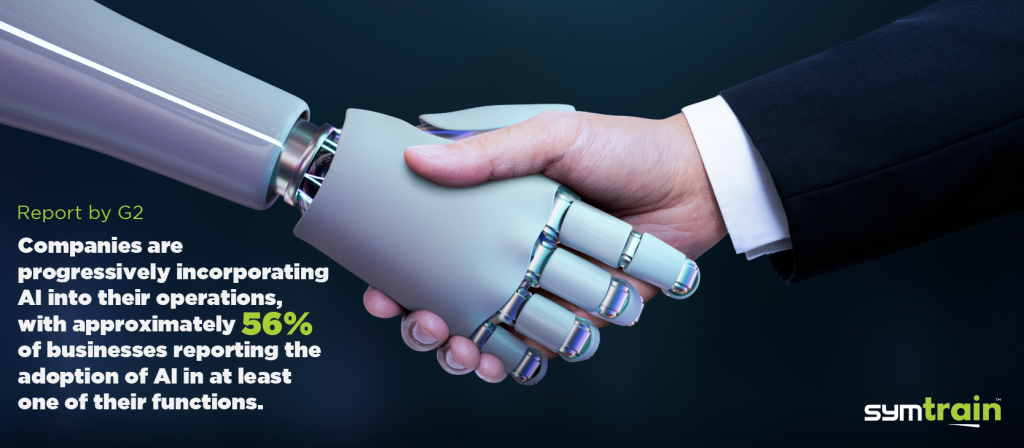
As indicated by G2, companies are progressively incorporating AI into their operations, with approximately 56% of businesses reporting the adoption of AI in at least one of their functions. 

Here, we delve into the ways AI coaching programs, particularly AI simulation software, are poised to transform the contact center operations. 

Understanding AI encompasses a diverse array of technologies capable of mimicking human thought processes, judgment, and intent, resulting in responses akin to human counterparts. This versatile tool reshapes data integration by analyzing vast datasets to enhance decision-making and problem-solving processes.  

When applied across various business models, AI simulation software empowers people to make decisions that would traditionally require many attempts to master. In that way, when applied to learning situations, workers can anticipate problems, and proactively address emerging issues before they have to face them in real life. The intelligent, adaptive nature of AI programs holds the potential to enhance many facets of the learning process. 

The Impact of AI Coaching in the Contact Center 

Focusing on the contact center industry, the incorporation of AI coaching facilitated by AI simulation software, offers four profound transformations for the better: 

Enhanced Agent Performance 

AI coaching, such as provided by SymTrain, has the capacity to significantly enhance agent performance by meticulously analyzing every interaction through AI simulation software. Coach Sym, an intuitive AI, delivers real-time, targeted feedback to agents following each learning experience. 

Moreover, trainers and supervisors can leverage this AI-driven data to identify areas where individual agents may struggle, stepping in to offer tailored coaching and support. This dual approach not only boosts employee engagement but also ensures that agents are better equipped for their roles within the organization. 

Improved Overall Efficiency 

AI coaching can improve the overall efficiency of contact center operations. SymTrain has already done this: one of SymTrain’s clients reported substantial gains in practice time for their agents after incorporating it into their training program.  

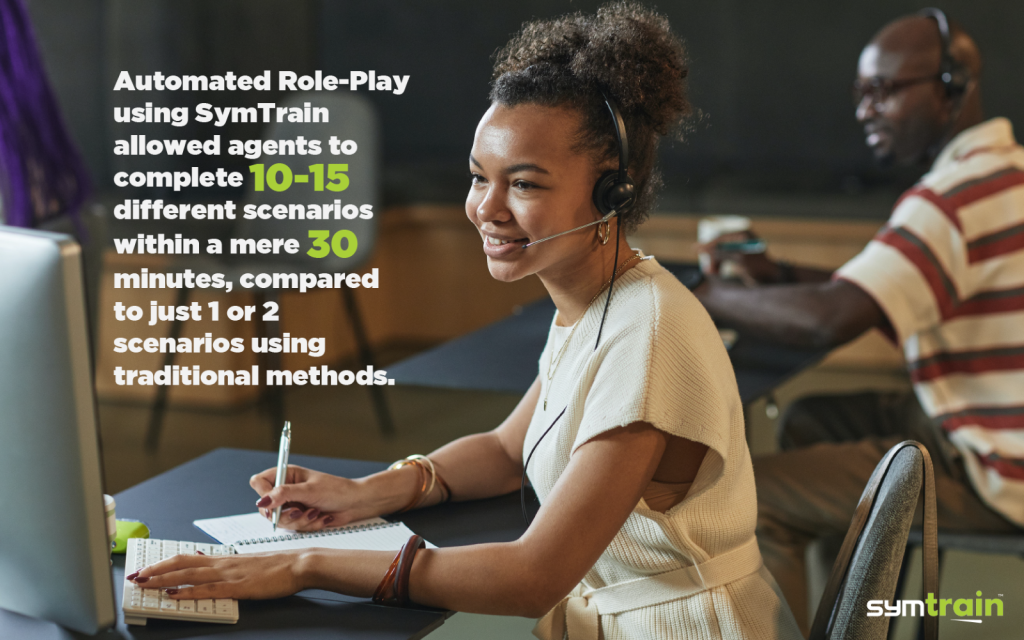
Automated Role-Play using SymTrain allowed agents to complete 10-15 different scenarios within a mere 30 minutes, compared to just 1 or 2 scenarios using traditional methods. This expansion in practice opportunities equips agents to navigate common challenges they’ll encounter when dealing with real customers. 

Through AI analysis, agents can fine-tune their problem-solving approaches, leading to quicker resolution of customer issues. The ability to practice and adapt to diverse situations streamlines training, reducing it from weeks to mere days. Agents, bolstered by their preparedness, exhibit increased confidence in tackling complex problems, reducing AHT while simultaneously elevating FCR rates.  

Cost-Efficient Training 

The incorporation of AI simulation software also yields substantial cost savings for businesses. SymTrain has led to a reduction in cost-to-serve by 4-7% within a span of 6 to 8 weeks. Coach Sym’s targeted feedback empowers trainers to identify areas where agents require additional support, enabling more effective training interventions. Addressing these issues during training minimizes the occurrence of repeat interactions and escalations, leading to significant cost savings. 

A Solid Customer Experience 

Perhaps one of the most crucial impacts of SymTrain lies in bringing an enhanced customer experience. When agents are well-prepared to handle any situation, they naturally deliver more positive interactions. AI technology serves as an invaluable tool for agents to access the information they need.  

In addition to Automated Role-Play, SymTrain offers real-time coaching and support during challenging situations. The inclusion of intuitive AI coaching programs in your digital toolbox invariably leads to greater customer satisfaction and increased brand loyalty. 

With Coach Sym and the capability to create customized simulations, contact centers can now pinpoint individual agent performance, ultimately delivering superior customer service and achieving peak productivity twice as fast. 

How AI Coaching Assist in Achieving Levels 3 and 4 of the Kirkpatrick Model 

The Kirkpatrick Model is a widely-used framework for evaluating training and development programs. It consists of four levels, each representing a higher level of evaluation than the previous one. Level 3 and 4 of the Kirkpatrick Model require measuring the transfer of learning and the impact of training on the organization. One effective way to achieve these levels is through AI Coaching which leverage automated role-plays. 

Automated role-plays are a type of simulation that allows learners to practice and apply their skills in a safe and controlled environment. These simulations can be delivered through a variety of platforms, including online training programs, virtual reality, or even physical simulations. 

Here’s how automated role-plays can help organizations achieve level 3 and 4 of the Kirkpatrick Model: 

Level 3: Transfer of Learning 

At level 3, the focus is on measuring the extent to which learners apply what they’ve learned in the training program to their job. This is important because the ultimate goal of any training program is to improve job performance and productivity. 

Automated role-plays can help achieve level 3 by allowing learners to practice their skills in a realistic scenario that closely mirrors their job. This provides learners with an opportunity to apply their knowledge and skills to real-world situations, which helps to reinforce their learning and increase their confidence. 

By measuring the performance of learners in these simulations, organizations can determine the extent to which learners are transferring their learning to their job. This information can be used to identify areas where additional support or training may be needed. 

Kirkpatrick model

Level 4: Impact on the Organization 

At level 4, the focus is on measuring the impact of the training program on the organization as a whole. This includes measuring the ROI of the training program and determining the extent to which it has improved organizational performance. AI Coaching is yielding a monthly return on investment of $600 per agent in service scenarios.  

Automated role-plays can help achieve level 4 by providing organizations with data on the performance of learners before and after the training program. This data can be used to measure the impact of the training program on key performance indicators (KPIs), such as productivity, quality, or customer satisfaction. 

In addition, by providing learners with the opportunity to practice their skills in a safe and controlled environment, organizations can reduce the risk of errors or mistakes in the workplace. This can lead to improved efficiency, reduced costs, and increased revenue. 

AI Coaching is a powerful tool for achieving level 3 and 4 of the Kirkpatrick Model. By allowing learners to practice their skills in a safe and controlled environment, organizations can measure the transfer of learning and the impact of the training program on the organization as a whole. 

Learn More: