A Solution for the Agent’s Journey  

The lifecycle of a contact center agent is fraught with challenges that directly impact the customer experience, an organization’s reputation, and its bottom line. High turnover rates among contact center agents have been a long-standing issue, exacerbating these challenges. According to recent findings in a McKinsey report, attrition in contact centers can reach up to 60% annually, a figure that highlights the ongoing struggle with agent retention​​. This high turnover rate not only disrupts workflows but also incurs significant costs associated with recruiting and training new agents​​. 

Other reports as highlighted by Tethr mention a high turnover rate attributed mainly to the demanding nature of the job and the pressure to deliver exceptional customer service consistently. It’s evident that addressing these challenges starts at the very beginning of an agent’s journey.  

Recruitment and Onboarding 

The journey begins with the recruitment of potential agents, where the focus lies on identifying individuals with strong communication skills, empathy, and resilience. These qualities are essential for navigating the complexities of customer interactions and ensuring a positive impact on the company’s image. The onboarding process is equally critical, involving comprehensive training that encompasses product knowledge, mastery of customer service techniques, and proficiency in using contact center technology. 

Growth and Development 

For contact center agents, professional growth and development are key to job satisfaction and effectiveness. Opportunities for skill enhancement, such as learning advanced customer service strategies, crisis management, and technical training, are vital. Career progression paths within the contact center or the broader organization offer agents a sense of purpose and direction, potentially leading to roles in supervision, quality assurance, or training and development. 

Daily Challenges and Rewards 

Contact center agents frequently encounter challenges, including the stress of dealing with difficult customers, the pressure of maintaining performance standards during peak times, and the complexity of resolving intricate issues. Despite these hurdles, the role is not without its rewards. The satisfaction derived from successfully addressing customer problems, coupled with recognition and incentive programs for outstanding performance, contributes to a rewarding work environment. 

Mental Health and Well-being 

Given the high-stress nature of their work, supporting the mental health and well-being of contact center agents is crucial. Strategies for managing stress, access to counseling services, and initiatives aimed at promoting a healthy work-life balance are essential components of a supportive workplace. These measures not only enhance the agents’ quality of life but also contribute to better job performance. 

Retention Strategies 

To retain top talent, organizations must offer competitive compensation, career advancement opportunities, and cultivate a positive work culture. These retention strategies are instrumental in building a committed and motivated workforce, capable of delivering superior customer service. 

SymTrain: A Modern Solution 

SymTrain is the platform that offers a contemporary solution to the challenges faced by contact center agents and their employers. By automating training and coaching through AI, SymTrain addresses key aspects of the agent lifecycle, from onboarding to ongoing development. The platform enables agents to practice dealing with a wide array of customer scenarios in a stress-free environment, enhancing their skills and confidence. This innovative approach not only improves the agent’s ability to handle challenging situations but also contributes to a reduction in attrition rates in the first 60 days, as employees feel better prepared and supported. 

How? 

  • Comprehensive Support: From onboarding through ongoing development, enhancing team abilities to utilize the platform fully. 
  • Flexible Training Content: Customizable to suit diverse industry needs, ensuring relevance and engagement. 
  • Targeted Training Approach: Easy content editing and branching scenarios reflect real-life interactions, improving problem-solving skills. 
  • Enhanced Learning Experience: AI and audio integrations offer varied training resources, increasing retention and comprehension. 
  • Efficient Content Management: Streamlined scripting and the creative reuse of content accelerate the training process, making it more effective. 

The evolution of agents in today’s customer-centric business environment demands a holistic approach to recruitment, training, and retention. With platforms like SymTrain offering innovative solutions, companies can better equip their agents to meet the challenges of customer service, ultimately leading to enhanced customer experiences, improved agent satisfaction, and stronger company performance. 
Targeted Assignments to Improve Performance 

In the contact center industry, employee retention and performance are critical issues that significantly impact operational efficiency and customer satisfaction. A McKinsey report reveals that contact centers face challenges in retaining agents due to factors like the lack of connection with the company’s mission, insufficient recognition, and high stress levels related to performance scrutiny and customer interactions.  

The data highlights that approximately 70% of agents who feel a strong alignment with their company’s mission are likely to stay, compared to only 25% of those who don’t feel such an alignment. Furthermore, the sense of belonging and community, effective team huddles, and stress management emerge as pivotal elements influencing agent retention and satisfaction​​. 

The Solution Through Targeted Assignments 

Targeted assignments stand out as a powerful solution to these challenges by ensuring that training and development efforts are closely aligned with individual needs and performance gaps. This approach not only supports contact center managers and trainers in addressing specific areas of improvement but also plays a crucial role in enhancing employee engagement, reducing attrition, and ultimately improving the overall customer experience. By focusing on personalized development, targeted assignments foster a more motivated and competent workforce, capable of delivering exceptional service. 

Based on insights from industry practices, targeted training programs can significantly improve agent performance, motivation, and overall call center operations in many ways: 

  • Motivation and Career Growth: Targeted training addresses individual agent needs, fostering a culture of continuous development and improvement. It motivates agents by offering them opportunities to enhance their skills, achieve milestones, and realize their potential for career advancement​​. 
  • Reduced Attrition Rate: High attrition is a prevalent challenge in contact centers. By providing engaging and relevant training, targeted assignments help in retaining talented agents. This approach not only saves on the costs associated with high attrition but also ensures a stable and experienced workforce capable of delivering higher quality service. 
  • Increased Profit Margins: Efficiently trained agents contribute to lower operational costs and improved service quality. This leads to enhanced customer satisfaction and loyalty, which are crucial for boosting revenue and profit margins. Well-trained agents are more adept at understanding customer needs, solving problems efficiently, and offering personalized service​​. 

SymTrain’s Impact with Targeted Assignments 

SymTrain changes the way contact centers address these challenges through its innovative platform, enabling targeted assignments for improvement based on individual or team performance. By leveraging AI simulations tailored to the specific needs identified through QA scorecard performance, SymTrain facilitates focused and relevant training interventions.  

This capability ensures that agents receive training that directly addresses their areas of improvement, leading to more effective skill development and performance enhancement. Such targeted training not only improves agent proficiency and confidence but also significantly contributes to higher job satisfaction and retention rates, ultimately benefiting the company through reduced training costs and improved customer service outcomes. 

SymTrain’s targeted approach brings numerous benefits, including: 

  • Personalized Training Programs: Utilizes AI to analyze QA scorecard performance, enabling the creation of customized training modules that address the unique needs of each agent or team. 
  • Enhanced Skill Development: Provides simulations that closely mirror real-life scenarios, which accelerates the learning process and enhances agents’ skills more effectively. 
  • Increased Agent Confidence: Through targeted training interventions, agents gain the confidence needed to handle complex customer interactions with ease. 
  • Improved Job Satisfaction: Agents appreciate the personalized growth opportunities, leading to higher levels of job satisfaction and engagement. 
  • Higher Retention Rates: By addressing individual areas of improvement, SymTrain helps reduce attrition, keeping experienced agents on the team longer. 
  • Cost Efficiency: Streamlines the training process by focusing resources where they are most needed, resulting in significant cost savings for the organization. 
  • Boosted Customer Service Outcomes: As agent performance improves, so does the quality of customer service, enhancing customer satisfaction and loyalty. 

Transcending traditional training methodologies, and recurring to AI, can usher in a new era of efficiency and precision in the development of operations.  

AI coaching

5 Ways AI Coaching Outperforms Traditional Training 

The transformative power of AI in talent development is becoming evident, bringing an unparalleled level of precision and customization to how organizations train and coach. This progression is being driven by advancements in generative AI, such as the popular models everyone is using nowadays, which are not merely enhancing but also expediting the integration of AI across various domains.  

According to McKinsey & Company, generative AI is poised to significantly increase productivity, potentially adding between $2.6 trillion to $4.4 trillion annually to the global economy. This contribution represents a significant increase in the value AI brings to the economy, potentially impacting all artificial intelligence applications by 15% to 40%. 

With that in mind, here are some remarkable instances illustrating the transformative impact of AI in training contexts: 

AI-driven simulations, such as those utilized in aviation training with flight simulators, provide a highly controlled and safe environment for practicing and refining skills. These simulators are crucial in preparing individuals for real-life complex scenarios they may encounter. By simulating real-world conditions without any risk, they allow for repeated practice sessions, helping learners to master various competencies. For pilots, this means gaining the confidence and skills necessary to navigate challenging weather conditions, emergency situations, and intricate maneuvers, ensuring they are well-equipped to handle the demands of actual flight with increased safety and precision. 

The ability of AI to sift through and analyze vast amounts of individual performance data to create tailored training plans is one of its most impactful features. This personalization enables training programs to be specifically designed to meet the unique needs of each learner, focusing on areas where they need the most improvement. By addressing specific skills and weaknesses, AI-driven training plans ensure that learners are not just receiving general instruction but are engaging in a learning process that is optimized for their personal development. This approach leads to more rapid improvement in key areas, from enhancing physical strength and endurance to developing technical skills and knowledge. 

The role of AI in providing detailed feedback and assessments represents a transformative leap in the field of training and coaching. With AI-powered systems, feedback is not only immediate but also deeply insightful, allowing learners to understand their performance in a nuanced way. This immediate and precise feedback helps individuals quickly identify their strengths and areas for improvement, promoting a proactive approach to personal development. Such a system encourages a culture of continuous improvement, where learners are constantly motivated to refine their skills and knowledge. 

Predictive analytics powered by AI offers a forward-looking perspective, enabling the prediction of future performance trends and the identification of potential leaders within organizations. This predictive capability allows businesses and educational institutions to recognize talent early and invest resources in nurturing their development strategically. By analyzing patterns and trends in performance data, AI can help forecast which individuals are likely to excel, ensuring that talent management efforts are more focused and effective, ultimately leading to a more capable and skilled workforce. 

AI technology is a boon for coaches, providing them with deep insights into areas where learners or team members may require additional focus. This assistance comes in various forms, from highlighting gaps in skills to suggesting personalized interventions for improvement. For instance, in customer service call centers, AI-powered coaching tools have been instrumental in identifying inefficiencies and guiding coaches on how to better train their teams, leading to noticeable improvements in operational performance. By arming coaches with this level of insight, AI enables a more data-driven approach to development, enhancing the overall effectiveness of training programs. 

Approximately 75% of the value from generative AI use cases is anticipated to benefit key areas such as customer operations, marketing and sales, software engineering, and R&D, announcing the technology’s versatility and transformative potential. 

Therefore, integrating generative AI into talent development and coaching signifies a paradigm shift towards more efficient, effective, and personalized training methodologies. With generative AI’s potential to drive significant economic value and productivity across various sectors, its impact on training and development is profound. 

Automated Microlearning with AI Coaching 

As the contact center industry workforce evolves, so must the training methods to keep pace with their emerging learning demands. In the digital age, new generations have developed shorter attention spans, largely influenced by the constant influx of information and rapid technological advancements. AI Coaching is addressing these concerns. 

With the world at their fingertips, Gen Z and Millennials have become accustomed to quick, short content that grabs their attention instantly. To adjust their profiles to a contact center training program, microlearning is proving to be the way for both seasoned professionals and the influx of younger generations entering the field. 

According to a survey conducted by PwC, just 6% of millennials place a high value on traditional classroom training. In that context, microlearning is all about delivering quick, focused, and personalized compact training modules that employees can conveniently access on different devices. This tailored approach aligns perfectly with the dynamic nature of contact centers. According to industry experts, microlearning is a natural fit for an environment where rapid-fire information exchange is the norm. 

A Deloitte study reveals that 63% of call centers are ramping up their training initiatives in the coming two years, highlighting a growing emphasis on skill enhancement and tool proficiency. This underscores the imperative for call centers to equip their teams with the ability to tackle intricate tasks with greater efficiency and speed, aligning with the principles of microlearning for rapid skill development. 

What is Microlearning? 

Microlearning is breaking down software process and the verbal or chat interactions into the several steps of a dialog, for example: Greeting, Identifying, Verifying, Discovery, Solution, etc. Each one of these moments and the optimum manner to handle them is scored in Quality Assessment platforms. What happens from there is where SymTrain picks up. SymTrain uses this concept of Microlearning by taking the moments of truth in an interaction which need addressing and sending Moments Syms to agents during idle time to deliver 10 – 30 seconds coachable moments which are automated role-plays with immediate automated assessment to drive incremental progress every day.  

The Benefits of Microlearning for Contact Centers 

Microlearning serves as a comprehensive training framework designed to shift the focus from the arduous process of extracting essential concepts and the connecting elements that bridge training to practical experience. Instead, it empowers organizations to seamlessly deliver actionable and readily applicable lessons directly into the hands of their agents, fostering a more efficient and effective learning process. 

This innovative method not only bolsters the onboarding process but also serves as an ongoing tool for reinforcing critical content introduced in initial training events. In the bustling world of contact centers, microlearning is proving to be the compass guiding agents toward success.  

In this environment, where agents often require rapid access to information and continuous skill development, microlearning offers several benefits: 

  • Agility: Microlearning modules are short and targeted, allowing agents to acquire knowledge and skills in bite-sized chunks. This agility aligns with the fast-paced nature of contact center work, where agents need to adapt quickly to customer inquiries and challenges. 
  • Engagement: With shorter content and interactive elements, microlearning keeps agents engaged and motivated. This is particularly important for younger generations like Gen Z and Millennials, who have shorter attention spans and prefer engaging, gamified learning experiences. 
  • Retention: Microlearning promotes better knowledge retention as it focuses on specific topics or skills. Agents can revisit modules as needed, reinforcing their learning and improving their long-term retention of information. 
  • Personalization: Microlearning can be tailored to each agent’s needs, addressing their individual knowledge gaps and areas for improvement. This personalized approach ensures that agents receive training that is relevant to their roles and skill levels. 
  • Performance Improvement: Microlearning can lead to faster skill acquisition and improved performance metrics, such as reduced handling times, increased first-call resolution rates, and higher customer satisfaction scores. 

Automated Microlearning with SymTrain 

The correlation between SymTrain’s methodology and microlearning represents a significant breakthrough for contact centers, offering the potential to enhance their key performance metrics in ways previously unattainable. 

SymTrain provides an interactive and captivating learning experience that resonates with the preferences of younger generations, such as Gen Z and Millennials. This innovative approach significantly improves their responsiveness and motivation during training, leading to more favorable and impactful learning outcomes. 

Furthermore, through targeted and automated microlearning simulations, SymTrain offers a dynamic platform capable of catering to the unique learning styles of new hires. By leveraging SymTrain, organizations can achieve remarkable results, such as reducing the time required for agents to reach proficiency by up to 50%. Additionally, this transformative approach can yield substantial cost savings, with the potential to save an average 5,000-seat operation up to $32,000 per day.  

SymTrain’s forward-thinking strategy not only caters to the learning preferences of the younger workforce but also drives tangible improvements in efficiency and cost-effectiveness within the contact center industry. 

Empowering Customer Service Reps with AI Tools  

AI has become one of the most relevant advances in recent years when it comes to automating processes, analyzing large amounts of data and interacting with customers. Its use has spread to all sectors, as it helps people achieve better results and be more efficient. The call center is no exception and artificial intelligence has allowed improvements to occur to offer a higher quality service to the customer. 

The potential of AI in customer service is very high, since there are certain operations that can be carried out more efficiently thanks to it. This is because contact centers store a large amount of complex data that can benefit from the information provided by analysis software powered by AI. What impact does this have on a practical level? Better customer service, increased productivity, and efficiency of agents. 

AI is used to make more accurate forecasts, help leaders proactively identify and manage issues, as well as offer customers different self-service solutions, among others. 

AI Tools that Drive Great Performance and Customer Service 

Let’s take a look at some of the AI advancements that help customer service representatives perform better at their job: 

1. Intelligent Agent Assistance 

Real-time interaction guidance in a call center leverages AI to listen and analyze each call as it happens. That is, it provides real-time feedback to agents about their social skills. AI-enabled real-time coaching can help redirect tense interactions, provide immediate feedback, and can help correct suboptimal behavior before it has a chance to perpetuate itself. Some practical cases are the following: 

  • If the agent repeatedly interrupts a customer, the system could tell the agent to use active listening skills. 
  • If the interaction guidance tool determines that a caller is stressed, it could remind the agent to show empathy. 
  • The AI assistant could hear that a caller has a question about the software’s functionality and automatically search for the knowledge base article relevant to the agent. 

The positive impact that AI can have on agent performance is not limited to real-time interaction guidance. AI-powered training and coaching platforms can shift the way agents are trained and guided in their interactions. The ability to practice voice interactions means that AI-powered solutions can also help agents solve problems. Intelligent assistants therefore help improve FCR rates, increase accuracy and reduce handling times, thereby improving customer service. 

2. Self-Service 

Self-service has established itself as a channel through which satisfactory experiences can be provided. Customer service-focused organizations design and optimize self-service so that customers can successfully resolve their own issues or transfer them to an agent for additional assistance. 

A clear example that self-service works is that according to a Gartner report, 70% of customers use self-service channels to resolve their issues quickly. To do this, a tool like IVR is used. This has been greatly improved thanks to a form of natural language processing, which allows the system to understand what customers are saying and respond to them to answer their question, guide them through self-service or connect them with an agent. Additionally, a call center can integrate AI-powered virtual agents into its IVR to create smarter experiences. Thanks to this, the mythical “press 1 if you want…” will no longer be necessary, which makes the service much more humanized. 

3. Forecast and Programming 

As we have discussed previously, AI is of great help in analyzing large amounts of data to identify patterns and make predictions. In this case, it determines which is the best algorithm to apply in each contact center and make the best predictions of customer behavior based on historical data. 

Call center scheduling software that leverages artificial intelligence meets business and customer needs by ensuring the right number of trained agents are scheduled at the right times while accommodating agent preferences. 

4. Chatbots and Virtual Agents 

Virtual agents use artificial intelligence, natural language processing, machine learning, and related technologies to understand human speech and intent. This makes virtual agents capable of handling more complex interactions than a rules-based chatbot. 

On the other hand, chatbots can interact with a person by presenting two or three response options. The data reveals that 63% of users surveyed were satisfied with their experience when interacting with a chatbot. However, human assistance is still essential when serving customers, as this percentage stated that they would like to be served by a real employee to help them if necessary. 

5. Supervisor Efficiency and Productivity 

Quality management analytics can make the quality monitoring process more efficient and accurate for supervisors evaluating interaction samples. This software analyzes and classifies interactions, making it easy to identify the right ones to evaluate. 

In addition, it provides efficient problem resolution by allowing supervisors to focus on the analysis of specific types of interaction. AI-infused forecasting and scheduling capabilities will also reduce time-consuming monitoring tasks. 

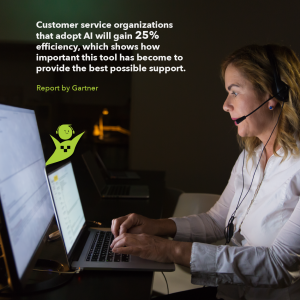
Gartner predicts that customer service organizations that adopt AI will gain 25% efficiency, which shows how important this tool has become to provide the best possible support.

Tips and Tricks

Tips and Tricks: Implementing Syms Across Many Levels

The recent SymTrain session offered valuable insights into “the why, the how, and the crucial use cases” for implementing Syms across beginner, intermediate, and advanced levels. Here’s a breakdown of the key points and actionable advice shared during the discussion:

Beginner Level:

  • Starting Point: Ideal for newcomers, especially back-office employees, to grasp basic navigations of essential programs. The focus here is on building foundational skills that are crucial for day-to-day operations.
  • Features: Beginner Syms come fully equipped with scripted scenarios, highlighted navigation paths, and coaching tips, ensuring a comprehensive learning experience even for absolute beginners.
  • Progression: By starting from zero, these Syms aim to elevate users’ proficiency to a solid ten, laying a strong groundwork for more advanced learning stages.

Intermediate Level:

  • Use Cases: Perfect for coaching, upskilling, and rolling out new processes. Intermediate Syms reinforce retention and encourage the practical application of learned skills, moving beyond mere theoretical knowledge.
  • Approach: The transition from being told what to say and do to a more guided form of learning, where users are prompted with coaching tips to navigate and communicate effectively, albeit with some autonomy.
  • Customized Learning Paths: Users are encouraged to progress at their own pace, reflecting the diverse learning needs and speeds among individuals. This level offers a balance between guided learning and independent problem-solving.

Advanced Level:

  • Real-World Preparation: Advanced Syms are designed to closely mimic real-life situations, providing a safe space for testing, ongoing learning, and ensuring uniformity in handling specific scenarios.
  • Advanced Use Cases: Ideal for assessing proficiency levels, where users can demonstrate their skills in a controlled, measurable manner.
  • Flexibility: Users who face challenges can revisit intermediate Syms for further practice, promoting a culture of continuous improvement and confidence-building.

Q and A

Participants engaged in a lively discussion about optimizing training with visual simulations. Concerns were raised about the length of these simulations and how they could be made more digestible. The consensus was to break down complex simulations into smaller, more focused steps, making them easier to manage and learn from. Additionally, there was a call for training materials that cater to non-customer-facing roles, highlighting the need for image-only simulations that accommodate a variety of learning levels. These suggestions underline a proactive approach to training, where materials are tailored to meet diverse needs and learning styles, enhancing efficiency and engagement in the training process.

Watch the Full Session Again

Discover the detailed insights, practical examples, and comprehensive strategies shared in this session so you can transform the training experience for your team:

Choosing the Right Training Software 

Prioritizing continuous training is crucial for keeping your team’s skills relevant. However, managing training processes can pose financial challenges for companies and logistical hurdles for those tasked with overseeing them. Utilizing training software can greatly streamline these processes. Yet, with numerous options available, choosing the right software isn’t always straightforward. 

What is Training Software? 

According to Skyprep, a training Software, also known as a Learning Management System, is a tool designed to enhance the efficiency of training teams through comprehensive management and process automation. It covers various aspects, from course cataloging to ongoing training monitoring, and result analysis. According to Fortune Business Insights, The LMS market itself is witnessing significant growth. It was valued at USD 20.33 billion in 2023 and is projected to grow to USD 23.35 billion in 2024. This growth is propelled by the adoption of virtual classrooms and mobile learning due to increased internet penetration. 

Here’s a brief examination of some of the key factors to assist in your decision-making process: 

What Are Your Training Goals? 

Prior to choosing from the multitude of options, it’s essential to clearly outline your training objectives. As highlighted by People Managing People, understanding the problem you’re aiming to solve, who will be using the software, and how it integrates with your current systems is key. This ensures that the selected software not only fits seamlessly into your existing workflows but also effectively addresses your training objectives, enhancing overall efficiency and outcomes. 

Assess the skills your workforce needs to acquire or refine, whether it pertains to compliance, technical proficiency, or soft skills enhancement. This understanding will aid in selecting a software solution tailored to your specific needs. 

Cost vs. ROI 

While budget considerations are crucial, prioritize assessing the overall return on investment. Compare pricing models, accounting for factors like user licenses, ongoing support, and potential scalability expenses. Focus on the long-term benefits and value the software offers to your organization, rather than opting solely based on cost. 

Intuitive Interface 

An intuitive interface is pivotal for the successful adoption of any training software. The simplicity of navigation, content accessibility, and progress tracking significantly impacts employee engagement with the training materials. Prioritize platforms with user-friendly interfaces that enhance the overall user experience. 

Content Creation Capabilities 

Assess the software’s capacity for content creation and management, supporting various formats such as videos, documents, and interactive modules. Additionally, robust content management tools facilitate efficient organization, updates, and tracking of content, ensuring its relevance and timeliness. 

Can You Scale It? 

Consider the software’s adaptability to accommodate your expanding workforce and evolving training requirements. A flexible solution should seamlessly adjust to changes in content, user numbers, and training methodologies, ensuring the effectiveness of your training program amidst business growth or transformations. 

Reporting Functions 

Opt for software equipped with robust analytics and reporting features. These enable you to monitor the efficacy of your training programs, pinpoint areas for enhancement, and gauge their impact on employee performance. Data-driven insights empower informed decision-making for future training endeavors. 

Compatibility with Existing Systems 

Evaluate the compatibility of the training software with your current systems. Seamless integration streamlines data flow, minimizes manual efforts, and fosters a cohesive approach to employee development, performance management, and learning initiatives. 

Thanks to training software, your employees will enjoy better communication with their managers and trainers and will feel more supported throughout the entire training process. By considering factors such as adaptability, user-friendliness, and integration capabilities, you can make an informed decision aligned with your business goals. 

Redefining Contact Center Coaching 

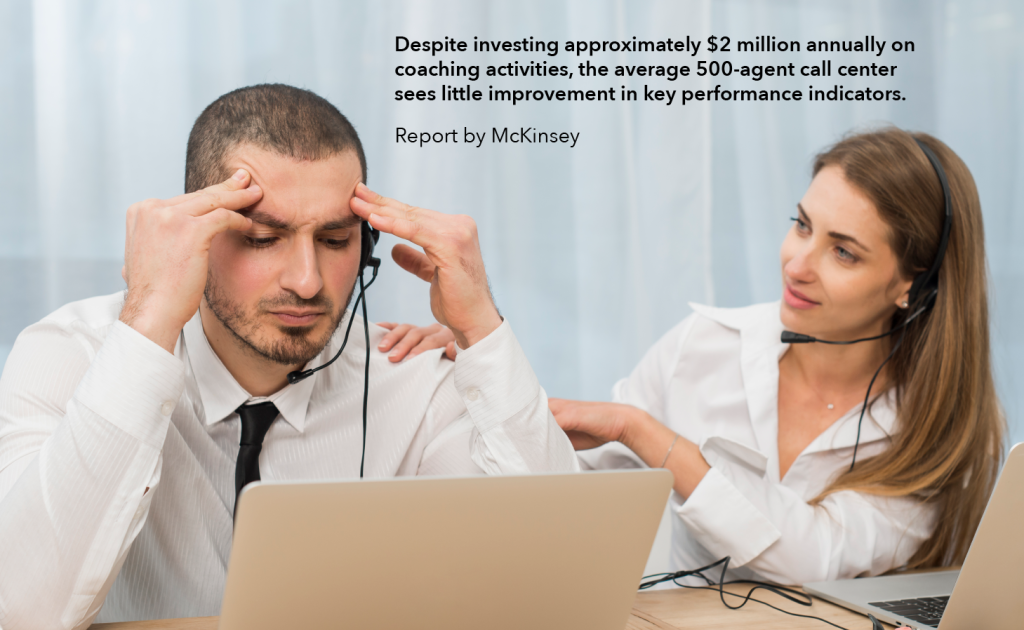
According to a report by McKinsey, despite investing approximately $2 million annually on coaching activities, the average 500-agent call center in North America often sees little improvement in key performance indicators, signaling a critical disconnect between coaching efforts and actual agent performance improvements. This stagnation occurs in an industry where digitization demands increasingly complex skill sets from agents and where coaching effectiveness is paramount to customer satisfaction and operational efficiency. 

The inefficiency of traditional coaching in contact centers stands as a costly and persistent challenge. The average contact center pours millions into coaching initiatives that too often fail to yield expected improvements in agent performance. This reality presents a stark disconnect, especially as digitization shifts the demands on agents towards more complex, high-value interactions. In a digital world where customer satisfaction hinges on the quality of each interaction, the stakes for effective coaching are at an all-time high. 

The Price of Inefficiency: Where Traditional Coaching Fails 

Despite regular coaching sessions being scheduled, the actual time spent on coaching is less than anticipated due to the competing responsibilities that supervisors face. The variability in coaching time can lead to inconsistency in service quality and agent performance​​. 

TechTarget further elaborates on the need for aligning training programs with an organization’s strategic goals. They emphasize the importance of developing knowledge, skills, abilities, and cultural (KSAC) profiles that are specific to roles within the contact center, enabling targeted and effective training. However, the challenge remains in implementing these practices consistently and measuring their impact on the bottom line​​. 

Automating the Coaching Journey 

This is where SymTrain’s Intelligent Coaching enters the arena, equipped to turn the tide. This is not just another tool, it represents a data-driven approach to agent development. By synthesizing key performance data with personalized training content, the AI-driven system targets the very heart of coaching: the individual agent’s growth areas. SymTrain’s Intelligent Coaching stand poised to convert the sea of performance metrics into actionable, customized coaching programs. They promise to automate the arduous process of identifying skill gaps and assigning relevant training, thereby streamlining the path to agent proficiency. 

The power of SymTrain’s Intelligent Coaching lies in its ability to offer personalized and targeted micro-coaching. By doing so, they answer a crucial question: what if agent development could be directly tied to quantifiable performance metrics? SymTrain’s approach reveals a vision for a system that not only assigns and measures but also adapts and evolves with the agent’s continuous learning journey. SymTrain’s solution suggests a future where the dashboard of a contact center supervisor becomes a dynamic map, charting the course for each agent’s development through an automated, individualized coaching plan. 

Intelligent Coaching Key Aspects 

  • Data Integration: SymTrain’s system ingests data into the platform to inform training direction. 
  • Performance Alignment: Intelligent Coaching is aligned with specific metrics, ensuring that training is directly connected to performance goals. 
  • Automated Assignment: The system assigns training and coaching plans based on the data-driven insights, streamlining the training process. 
  • Practical Simulations: Generates redacted transcripts for agents to engage in practical, scenario-based learning experiences. 
  • Coaching Library: A repository of coaching content is built up over time, providing a wealth of resources for agent development. 
  • Scorecard Analysis: Performance is analyzed and translated into scorecards, offering clear, measurable insights into agent progress. 

By leveraging AI to address the inefficiencies of traditional coaching methods, SymTrain’s Intelligent Coaching is set to make a marked difference in the contact center industry. The integration of these plans with existing QA and performance metrics ensures that coaching is not only relevant but also reflects the strategic direction of continuous skill development. It’s a significant leap toward a future where coaching is less about the time spent and more about the impact made, a future where contact center agents are not just trained but are continuously evolving to meet the complex demands of the digital customer service landscape. 

As the call center environment becomes increasingly sophisticated, SymTrain offers a promising solution for businesses seeking to refine their coaching strategies and improve overall performance.  

Tips and Tricks

Tips and Tricks: Creating Random Branched Simulations

In the latest edition of Tips and Tricks, SymTrain hosted a special session focused on creating random branched simulations, a powerful tool for enriching the training and coaching of contact center agents. Jamie Leckband, alongside James Chaffin, Speech & Quality Manager at Revenue Group, shared invaluable insights into leveraging this feature to enhance learning outcomes. Here are the key takeaways from the session:

1. Introduction to Random Branched Simulations

Jamie Leckband kicked off the session by introducing the concept of random branched simulations (Syms), emphasizing their efficiency in incorporating extensive information into a single simulation. These Syms are designed to randomly present different scenarios (branches) to trainees, ensuring a varied learning experience each time.

2. Benefits of Using Random Branched Syms

  • Efficiency in Training: Jamie highlighted how quickly and efficiently trainers can create these Syms, allowing for rapid development and deployment of training materials.
  • Enhanced Learning through Repetition: The use of random branches in simulations ensures that agents are exposed to various scenarios, reinforcing learning and aiding in memorization and application of knowledge.

3. Practical Demonstration

Jamie provided a live demonstration of creating a random branched Sym, showcasing the simplicity and speed of the process. This practical insight underlined how trainers could effortlessly integrate multiple scenarios into a single Sym, covering objections, empathy, and other critical skills.

4. Keyword Integration for Automated Feedback

A significant highlight was the discussion on integrating keywords and phrases into Syms for automated feedback. By marking certain words or phrases in the script, trainers can ensure that key concepts are recognized and reinforced throughout the simulation.

5. Time-Saving Tips

The session covered time-saving tips for creating Syms, including the use of document templates to pre-define keywords and phrases, making the script preparation process even more streamlined.

6. Guest Insights

James Chaffin shared his expertise, emphasizing the practical applications and benefits of random branched Syms in real-world training scenarios. His insights added a valuable perspective on how such simulations could significantly impact agents’ performance and learning curves.

Experience the Full Session on Creating Random Branched Simulations

For those eager to relive or know more about random branched simulations to truly improve your skills in creating dynamic, engaging training scenarios for agents, we invite you to watch the full Tips and Tricks session featuring special guest James Chaffin, Speech & Quality Manager at Revenue Group:

Tips and Tricks

Tips and Tricks: 10 Tips for Creating a Better Sym

In this session of Tips and Tricks, we shared the top 10 tips for you to create superior simulations with SymTrain. Attendees were able get strategies to renovate their approach to building a simulation, releasing the full potential of our platform.

  • Real Voice Integration: The power of voice in simulations is undeniable. By incorporating coaching tips articulated in a genuine, human voice, we bridge the gap between digital learning and personal interaction. This strategy infuses a sense of reality and authenticity into simulations, making them more relatable and engaging for users. The key is not just using any voice, but one that conveys the right tone, emotion, and clarity, fostering a deeper connection with the learner.
  • Quality over Perfection: It’s a common misconception that simulations need to be flawless in their audio presentation. However, feedback often highlights that even authentic voices can be perceived as robotic. The essence lies in focusing on the quality of delivery rather than striving for an unattainable perfection. The emotional resonance and the ability to convey the intended message effectively are far more critical than a perfect, but perhaps impersonal, voiceover.
  • Learner Engagement Analysis: To truly understand the impact of your simulations, it’s essential to observe and analyze how learners interact with them. Which simulations are they returning to for additional practice beyond the required sessions? This pattern of engagement is a strong indicator of the simulation’s appeal and effectiveness. It reveals what elements are resonating with learners, providing you with valuable data to create more compelling content.
  • Iterative Design: Embrace a cycle of continuous improvement. Leverage both quantitative data and qualitative feedback to evolve your simulations. When learners choose to engage with a simulation more than required, it presents an opportunity to understand the ‘why’ behind their actions. Is it the complexity of the scenario, the relevance of the content, or the enjoyment of the experience? Unpacking these motivations can inform how to structure and design future simulations for maximum impact.
  • User Feedback: There is no substitute for direct input from the users themselves. Engage with your learners to understand their perspectives on the simulations. Inquire about the aspects they find most effective, enjoyable, and enlightening. This feedback is a goldmine for tailoring your simulations to user preferences and creating experiences that not only educate but also delight the users.

Participants engaged with insightful queries:

Branching Simulations:

The query about the timeline for branching simulations to be available for different types of simulations, beyond just audio, was raised. The team indicated that the expansion of branching simulations to include visual elements is on the product roadmap, acknowledging its importance for users who rely heavily on visual simulations.

Practical Workarounds:

Discussion touched on the immediate strategies for dealing with the current limitations in simulation features. Until the branching simulations become available for all types, the team recommended a workaround involving the creation of an audio simulation with the branching feature and then integrating it into a module or training plan alongside the navigational simulation. This two-step process allows learners to engage with conversational aspects first, followed by navigational elements, offering a temporary solution that still facilitates comprehensive learning experiences.

If you missed our lively and insightful session or you’d like to revisit the rich discussion, we invite you to watch the video. You’ll find valuable strategies for enhancing your simulation creation process, with a special focus on what makes simulations resonate with users. It’s a resource packed with actionable tips and thoughtful answers to common questions in the field.

If you want to check out the session material click here: